
Overview
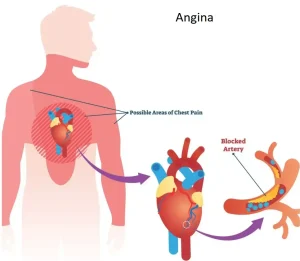
Angina (an-JIE-nuh or AN-juh-nuh) is a type of chest pain caused by reduced blood flow to the heart muscle. It is a symptom of coronary artery disease and is also known as angina pectoris.
Angina is commonly described as squeezing, pressure, heaviness, tightness or pain in the chest. Some people say it feels like a heavy weight resting on the chest. Angina can be a new chest pain that needs medical evaluation, or it may be recurring pain that improves with treatment.
Angina is relatively common, but it can be difficult to distinguish from other causes of chest pain, such as heartburn. Any unexplained chest pain should be evaluated by a healthcare professional immediately.
Types
There are different types of angina. The type depends on the underlying cause and whether rest or medicine relieves symptoms.
Stable angina is the most common form. It usually occurs during physical activity or emotional stress. The pain goes away with rest or angina medicine. Stable angina is predictable and similar to previous episodes. Symptoms usually last a few minutes or less.
Unstable angina is a medical emergency. It is unpredictable and may occur at rest or with minimal activity. The pain is often severe, lasts longer than stable angina, and does not improve with rest or usual medicines. Unstable angina can lead to a heart attack and requires urgent treatment.
Variant angina, also called Prinzmetal angina, is not caused by coronary artery disease. It results from a spasm in the heart’s arteries that temporarily reduces blood flow. It often occurs at rest, usually overnight, and may improve with angina medicine.
Refractory angina refers to frequent angina episodes that continue despite a combination of medicines and lifestyle changes.
Symptoms
Angina symptoms mainly involve chest pain or discomfort, which may feel like:
-
Pressure
-
Squeezing
-
Burning
-
Fullness
-
Pain
Pain may also spread to other areas, including the arms, neck, jaw, shoulders or back.
Other symptoms may include:
-
Shortness of breath
-
Fatigue
-
Dizziness
-
Nausea
-
Sweating
The severity, duration and pattern of symptoms can vary. New or worsening symptoms may indicate unstable angina or a heart attack and require immediate medical evaluation.
Angina symptoms in women may differ from typical chest pressure. Women may experience discomfort in the neck, jaw, teeth or back, nausea, shortness of breath, stabbing pain, or stomach pain.
When to see a doctor
Chest pain that lasts longer than a few minutes and does not improve with rest or angina medicine may be a sign of a heart attack. Emergency medical help should be sought immediately.
If chest discomfort is new or different, a healthcare professional should evaluate it to determine the cause. People with known stable angina should seek urgent care if symptoms worsen or change.
Causes
Angina occurs when the heart muscle does not receive enough oxygen-rich blood, a condition called ischemia.
The most common cause is coronary artery disease. In this condition, fatty deposits called plaques narrow the coronary arteries, a process known as atherosclerosis. Plaques may rupture or cause blood clots, suddenly reducing blood flow to the heart muscle.
When the heart’s oxygen demand increases, such as during exercise or stress, reduced blood flow can trigger angina symptoms.
Risk factors
Several factors increase the risk of developing angina:
-
Increasing age, especially over 60
-
Family history of heart disease or heart attack
-
Tobacco use, including smoking or chewing tobacco
-
Diabetes
-
High blood pressure
-
High cholesterol or high triglycerides
-
Chronic kidney disease or peripheral artery disease
-
Lack of regular physical activity
-
Obesity
-
Emotional stress
-
Certain medicines that tighten blood vessels
-
Drug misuse, such as cocaine or other stimulants
-
Exposure to cold temperatures
Complications
Angina can limit daily activities due to chest discomfort. The most serious complication is a heart attack.
Warning signs of a heart attack include:
-
Chest pressure or squeezing pain lasting more than a few minutes
-
Pain spreading to the arm, shoulder, back, jaw or teeth
-
Shortness of breath
-
Nausea or vomiting
-
Sweating
-
Fainting
-
A sense of impending doom
Immediate emergency medical care is required if these symptoms occur.
Prevention
Angina can often be prevented or controlled through lifestyle changes and proper medical care. Helpful steps include:
-
Avoiding or limiting alcohol
-
Not smoking
-
Eating a heart-healthy diet
-
Exercising regularly as advised by a healthcare professional
-
Maintaining a healthy weight
-
Managing conditions such as diabetes, high blood pressure and high cholesterol
-
Reducing stress
-
Getting 7 to 9 hours of sleep each night
Advertisement
