
Overview
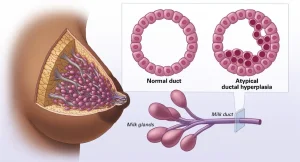
Atypical hyperplasia of the breast refers to the growth of abnormal, precancerous cells within breast tissue. In this condition, breast cells increase in number and show changes in their appearance when examined under a microscope, making them look different from normal breast cells.
Atypical hyperplasia is not breast cancer. However, it is an important warning sign because it is linked to a higher risk of developing breast cancer later in life. People diagnosed with this condition are often advised to follow a personalized care plan aimed at managing future breast cancer risk.
Management commonly includes more frequent breast cancer screening tests. In some cases, medications may also be considered to help lower the risk of breast cancer development.
Symptoms
Atypical hyperplasia of the breast usually does not cause noticeable symptoms.
Most cases are discovered during a breast biopsy. A biopsy is a procedure in which a small sample of breast tissue is removed and examined in a laboratory. This test is often recommended when an imaging test such as a mammogram or ultrasound shows an abnormal finding. A biopsy may also be done to evaluate a breast concern, such as a lump or an area of tissue change.
Causes
The exact cause of atypical hyperplasia of the breast is not fully understood.
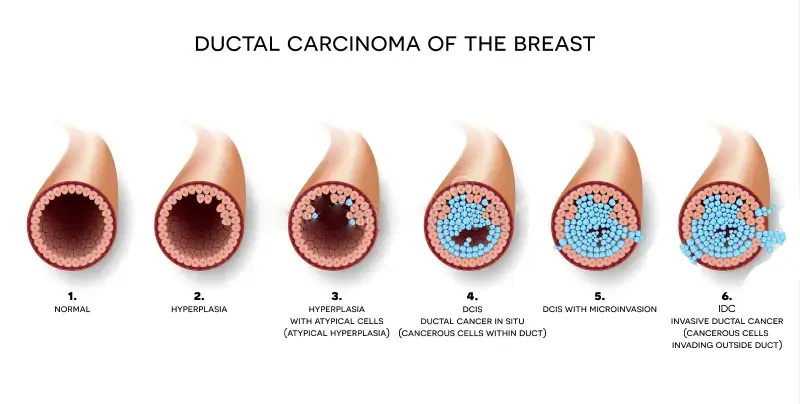
The condition develops when breast cells acquire changes in their DNA. DNA contains instructions that control how cells grow and divide. These changes cause the cells to multiply more than usual, leading to a buildup of cells in the breast tissue, a process known as hyperplasia. The DNA changes also alter how the cells look, making them atypical rather than normal.
Atypical hyperplasia is considered a very early step in the pathway that can lead from normal breast cells to cancer cells. If atypical cells continue to grow and collect additional DNA changes, they may eventually develop into breast cancer. More research is needed to understand why this happens in some people and not in others.
Atypical hyperplasia can develop in different parts of the breast:
-
Atypical ductal hyperplasia involves abnormal cell growth in the breast ducts, which carry milk to the nipple. This is the more common type.
-
Atypical lobular hyperplasia involves abnormal cell growth in the breast lobules, which are the glands that produce milk. This type is less common.
Both types increase the risk of breast cancer, and their management approaches are generally similar.
Risk Factors
There are no specific risk factors known to directly cause atypical hyperplasia of the breast. However, it is part of a group of noncancerous conditions known as benign breast diseases, which are linked to certain risk factors.
Factors associated with a higher risk of benign breast disease include:
-
A family history of breast cancer, particularly in a parent, sibling or child, which may increase the chance of developing atypical hyperplasia or other benign breast conditions before menopause
-
Use of menopausal hormone therapy, as some hormone treatments for menopause symptoms may increase the risk of atypical hyperplasia and other benign breast changes
Complications
The main complication of atypical hyperplasia of the breast is an increased risk of developing breast cancer in the future.
People with atypical hyperplasia have about a fourfold higher risk of breast cancer compared with those who do not have this condition. The level of risk is similar for both atypical ductal hyperplasia and atypical lobular hyperplasia.
Long-term studies show that breast cancer risk continues to rise over time. About 25 years after diagnosis, roughly 30 out of 100 people with atypical hyperplasia may develop breast cancer, while about 70 will not. These statistics highlight the importance of long-term monitoring and risk management.
Prevention
There is no proven way to prevent atypical hyperplasia of the breast. However, steps that reduce the risk of breast cancer may also help lower the risk of developing atypical hyperplasia.
Measures that may help reduce breast cancer risk include:
-
Discussing breast cancer screening with a healthcare professional and deciding on appropriate tests and screening intervals
-
Becoming familiar with the normal look and feel of your breasts so that changes can be reported promptly
-
Limiting alcohol intake, as alcohol use is linked to increased breast cancer risk
-
Exercising regularly, aiming for physical activity on most days of the week
-
Using menopausal hormone therapy cautiously, at the lowest effective dose and for the shortest possible time
-
Maintaining a healthy body weight through balanced nutrition and regular physical activity
These steps cannot guarantee prevention, but they support overall breast health and may help reduce long-term risk.
Advertisement
