
Overview
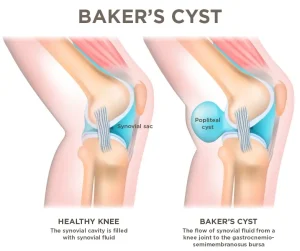
A Baker cyst, also known as a popliteal cyst, is a fluid-filled swelling that develops behind the knee. It forms when excess joint fluid is pushed into the back of the knee, often due to an underlying knee problem. A Baker cyst can cause a feeling of tightness or stiffness and may limit knee movement. In many cases, the cyst itself is not serious, but it usually signals an underlying joint condition that may need medical attention.
Symptoms
Symptoms of a Baker cyst can vary depending on its size and the underlying cause. Some people may have no noticeable symptoms. When symptoms occur, they may include:
-
Swelling or a visible lump behind the knee
-
Tightness or stiffness in the knee
-
Pain that worsens when bending or straightening the leg
-
Reduced range of motion in the knee
Symptoms may become more noticeable after prolonged standing or physical activity.
Causes
A Baker cyst develops when excess synovial fluid accumulates in the knee joint and moves into the space behind the knee. This usually occurs as a result of joint irritation or damage. Common causes include:
-
Knee arthritis, especially osteoarthritis or rheumatoid arthritis
-
Meniscal tears or cartilage damage
-
Knee injuries causing inflammation
-
Chronic joint inflammation
The cyst itself is a result of increased fluid production rather than a primary disease.
Risk factors
Certain factors increase the likelihood of developing a Baker cyst. These include:
-
Increasing age, particularly in adults over 40
-
Existing knee arthritis or inflammatory joint disease
-
Previous knee injury or surgery
-
Repetitive stress on the knee joint
Children can also develop Baker cysts, though this is less common and often resolves on its own.
Complications
Most Baker cysts do not cause serious complications. However, in some cases, the cyst may rupture, leading to sudden pain, swelling, and redness in the calf that can resemble a blood clot. Large cysts may also compress nearby structures, causing discomfort or nerve-related symptoms. Treating the underlying knee condition usually helps reduce the risk of complications.
Prevention
Baker cysts cannot always be prevented, especially when linked to arthritis or joint disease. However, steps that may reduce the risk include:
-
Managing underlying knee conditions effectively
-
Avoiding excessive strain on the knees
-
Maintaining a healthy body weight to reduce joint stress
-
Strengthening muscles around the knee to improve joint support
Early evaluation and treatment of knee pain or injury can help prevent fluid buildup and reduce the likelihood of developing a Baker cyst.
Advertisement
