
Overview
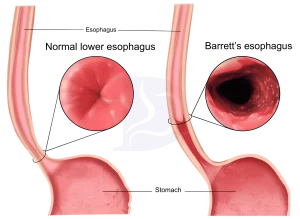
Barrett’s esophagus is a condition in which the normal lining of the lower esophagus changes to tissue similar to the lining of the intestine. This change usually develops as a result of long-term gastroesophageal reflux disease, in which stomach acid repeatedly flows back into the esophagus. Barrett’s esophagus itself does not cause pain, but it is considered a precancerous condition because it increases the risk of esophageal cancer. Regular monitoring is often recommended for early detection of complications.
Symptoms
Barrett’s esophagus often does not cause specific symptoms beyond those of chronic acid reflux. When symptoms are present, they are usually related to gastroesophageal reflux disease and may include:
-
Frequent heartburn
-
Regurgitation of stomach acid or food
-
Difficulty swallowing
-
Chest discomfort not related to the heart
-
Chronic cough or hoarseness
Some individuals may have Barrett’s esophagus without experiencing noticeable symptoms.
Causes
The primary cause of Barrett’s esophagus is long-standing exposure of the esophagus to stomach acid. This repeated irritation leads to cellular changes in the esophageal lining over time. Factors that contribute to acid reflux and the development of Barrett’s esophagus include:
-
Chronic gastroesophageal reflux disease
-
Weakening of the lower esophageal sphincter
-
Delayed stomach emptying
-
Persistent inflammation of the esophagus
Not everyone with acid reflux develops Barrett’s esophagus.
Risk factors
Certain factors increase the likelihood of developing Barrett’s esophagus. These include:
-
Long-term or severe acid reflux
-
Male sex
-
Age over 50 years
-
Excess body weight, especially abdominal obesity
-
Smoking
-
Family history of Barrett’s esophagus or esophageal cancer
People with these risk factors may benefit from regular medical evaluation.
Complications
The most significant complication of Barrett’s esophagus is an increased risk of esophageal adenocarcinoma. Although the overall risk is relatively low, abnormal cell changes known as dysplasia can develop over time. Other complications may include esophageal narrowing due to scarring and persistent inflammation. Regular surveillance helps detect precancerous changes early.
Prevention
Barrett’s esophagus cannot always be prevented, but reducing acid reflux may lower the risk. Preventive strategies include:
-
Managing gastroesophageal reflux disease with lifestyle changes and medications
-
Maintaining a healthy body weight
-
Avoiding smoking
-
Limiting foods and beverages that trigger reflux
-
Eating smaller meals and avoiding lying down soon after eating
Early treatment of chronic acid reflux and regular medical follow-up can help reduce the risk of developing Barrett’s esophagus and its complications.
Advertisement
