
Overview
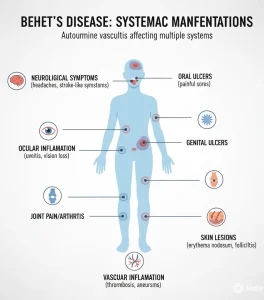
Behcet’s disease is a rare, long-term inflammatory disorder that affects blood vessels throughout the body. It can cause a wide range of symptoms involving the mouth, skin, eyes, joints, blood vessels, nervous system, and digestive tract. The condition often follows a pattern of flare-ups and periods of remission.
Behcet’s disease typically begins in early adulthood and is more common in regions along the ancient Silk Road, including parts of Asia, the Middle East, and the Mediterranean. The exact cause is unknown, but it is believed to involve an abnormal immune response.
Symptoms
Symptoms of Behcet’s disease vary widely between individuals and may change over time. Some symptoms are more common than others.
Common symptoms include:
-
Painful mouth ulcers that recur frequently
-
Genital ulcers that may heal with scarring
-
Eye inflammation causing redness, pain, blurred vision, or light sensitivity
-
Skin lesions such as acne-like bumps or tender nodules
-
Joint pain and swelling, often affecting the knees or ankles
Other possible symptoms include:
-
Headaches or neurological symptoms
-
Digestive problems such as abdominal pain or diarrhea
-
Blood vessel inflammation leading to clots or aneurysms
The severity of symptoms can range from mild to serious.
Causes
The exact cause of Behcet’s disease is not fully understood. It is believed to result from an abnormal immune system response that causes inflammation in blood vessels.
Possible contributing factors include:
-
Genetic predisposition, especially in people with certain immune-related genes
-
Environmental triggers such as infections
-
Overactive immune response targeting healthy tissues
The condition is not contagious and does not result from lifestyle choices.
Risk factors
Certain factors increase the likelihood of developing Behcet’s disease.
Risk factors include:
-
Age, most commonly affecting people in their 20s and 30s
-
Geographic origin from Asia, the Middle East, or the Mediterranean region
-
Family history of Behcet’s disease
-
Male sex, as the disease may be more severe in men in some populations
Although rare, Behcet’s disease can affect people of any background.
Complications
Behcet’s disease can lead to serious complications if inflammation affects vital organs.
Possible complications include:
-
Vision loss from repeated eye inflammation
-
Blood clots in veins or arteries
-
Neurological complications such as stroke or brain inflammation
-
Digestive tract ulcers causing bleeding
-
Reduced quality of life due to chronic pain and fatigue
Early diagnosis and appropriate treatment help reduce the risk of long-term complications.
Prevention
There is no known way to prevent Behcet’s disease. Management focuses on controlling symptoms and reducing flare-ups.
Helpful measures include:
-
Following prescribed treatment plans to control inflammation
-
Attending regular medical checkups, especially eye examinations
-
Avoiding known triggers that worsen symptoms
-
Managing stress and maintaining a healthy lifestyle
-
Seeking early medical care during symptom flare-ups
With proper management, many people with Behcet’s disease can lead active and productive lives.
Advertisement
