
Overview
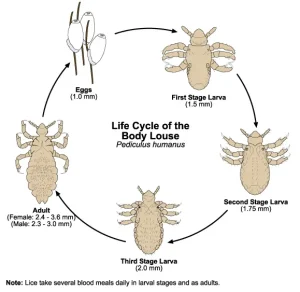
Body lice are small parasitic insects that live in clothing seams and bedding and feed on human blood by moving onto the skin. Unlike head lice, body lice do not live on the scalp but stay in clothing and only come to the skin to feed. Infestation is most commonly associated with poor hygiene and crowded living conditions.
Body lice are important not only because they cause itching and skin irritation, but also because they can transmit certain infectious diseases. Prompt identification and treatment help prevent complications and spread.
Symptoms
Symptoms of body lice infestation usually develop after repeated bites and may include:
-
Intense itching, especially around the waist, groin, and underarms
-
Red, inflamed bite marks on the skin
-
Thickened or darkened skin with long-term infestation
-
Small sores caused by scratching
-
Restlessness or difficulty sleeping due to itching
In early infestations, symptoms may be mild or absent.
Causes
Body lice infestation occurs through close contact with infested clothing, bedding, or individuals. The lice lay eggs in clothing seams and move to the skin to feed.
Common causes include:
-
Wearing infested or unwashed clothing
-
Sharing clothing, towels, or bedding
-
Infrequent bathing or laundering
-
Living in crowded or unsanitary conditions
Body lice cannot jump or fly; they spread through direct contact.
Risk factors
Certain situations increase the risk of body lice infestation, including:
-
Poor personal hygiene
-
Limited access to clean clothing and bathing facilities
-
Homelessness
-
Refugee or disaster settings
-
Overcrowded living conditions
Body lice are more common in colder climates where people wear multiple layers of clothing for long periods.
Complications
Body lice infestation can lead to complications, especially if untreated. Possible complications include:
-
Secondary bacterial skin infections from scratching
-
Chronic skin inflammation and thickening
-
Transmission of infectious diseases such as trench fever, typhus, or relapsing fever
Medical evaluation is important if signs of infection or fever develop.
Prevention
Preventing body lice focuses on maintaining good hygiene and clean living conditions. Effective preventive measures include:
-
Bathing regularly with soap and water
-
Washing clothes, bedding, and towels in hot water
-
Changing into clean clothes frequently
-
Avoiding sharing personal items
-
Improving access to hygiene facilities in high-risk settings
Good hygiene and regular laundering are the most effective ways to prevent body lice infestation.
Advertisement
