
Overview
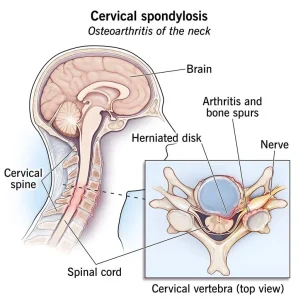
Cervical spondylosis is a common age-related condition caused by degeneration of the bones, discs, and joints in the cervical spine, which is the neck portion of the spine. Over time, wear and tear can lead to disc dehydration, bone spur formation, and reduced flexibility of the neck. While many people experience no symptoms, others may develop pain, stiffness, or neurological problems due to nerve compression.
Symptoms
Symptoms vary in severity and may range from mild discomfort to significant neurological impairment.
-
Neck pain and stiffness
-
Reduced range of motion in the neck
-
Headaches, often originating from the back of the head
-
Pain radiating to the shoulders or arms
-
Numbness or tingling in the arms, hands, or fingers
-
Muscle weakness in the upper limbs
-
Loss of balance or coordination in severe cases
Causes of Cervical Spondylosis
Cervical spondylosis develops as a result of age-related changes in the cervical spine structures.
-
Degeneration and dehydration of spinal discs
-
Formation of bone spurs due to joint wear
-
Herniation or bulging of cervical discs
-
Stiffening of spinal ligaments
-
Long-term mechanical stress on the neck
Risk Factors for Cervical Spondylosis
Certain factors increase the likelihood of developing cervical spondylosis.
-
Advancing age
-
Occupations involving repetitive neck movements
-
Poor posture or prolonged screen use
-
History of neck injury
-
Smoking
-
Genetic predisposition
Complications of Cervical Spondylosis
In some cases, cervical spondylosis can lead to serious complications if nerves or the spinal cord are compressed.
-
Cervical radiculopathy causing arm pain or weakness
-
Cervical myelopathy leading to gait problems and hand clumsiness
-
Chronic neck pain
-
Reduced quality of life
-
Permanent nerve damage in advanced cases
Prevention of Cervical Spondylosis
Although cervical spondylosis cannot always be prevented, certain measures may reduce its risk or severity.
-
Maintaining good posture, especially during computer or phone use
-
Regular neck and upper body strengthening exercises
-
Taking breaks from prolonged sitting or repetitive tasks
-
Using ergonomic furniture and proper pillow support
-
Avoiding smoking
-
Seeking early medical care for persistent neck symptoms
Early intervention and lifestyle modifications can help manage symptoms and slow progression of cervical spondylosis.
Advertisement
