
Overview
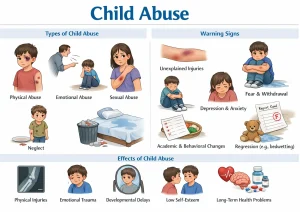
Child abuse refers to any action or lack of action by a parent, caregiver, or other responsible adult that causes harm, potential harm, or threat of harm to a child. It can affect a child’s physical health, emotional well-being, development, and safety. Child abuse may occur in homes, schools, institutions, or communities and can have lifelong consequences if not identified and addressed early.
Symptoms
Symptoms of child abuse vary depending on the type of abuse and the child’s age, but they often involve physical, emotional, behavioral, or developmental changes.
Common signs and symptoms include:
-
Unexplained injuries such as bruises, burns, fractures, or cuts
-
Frequent injuries with inconsistent explanations
-
Sudden changes in behavior or school performance
-
Fearfulness, withdrawal, or extreme anxiety
-
Regression to earlier behaviors such as bedwetting
-
Poor hygiene or inappropriate clothing for the weather
Emotional and behavioral symptoms may include:
-
Depression or excessive sadness
-
Aggression or extreme anger
-
Low self-esteem
-
Sleep disturbances or nightmares
-
Avoidance of certain people or places
Causes
Child abuse is usually the result of complex social, psychological, and environmental factors rather than a single cause.
Common contributing causes include:
-
Parental stress, substance abuse, or mental health disorders
-
Lack of parenting knowledge or coping skills
-
Family conflict or domestic violence
-
Social isolation or lack of support systems
-
Poverty and financial stress
-
History of abuse in the caregiver’s own childhood
Abuse may be physical, emotional, sexual, or involve neglect of basic needs.
Risk Factors
Certain factors increase the risk of child abuse, although abuse can occur in any family or social group.
Key risk factors include:
-
Young or inexperienced parents
-
Substance abuse in the household
-
Mental illness in caregivers
-
Children with disabilities or chronic illnesses
-
Family instability or frequent changes in caregivers
-
Lack of access to social or community support
Risk factors increase vulnerability but do not justify abusive behavior.
Complications
Child abuse can result in serious short-term and long-term consequences that affect physical health, mental health, and overall development.
Possible complications include:
-
Physical injuries or permanent disability
-
Developmental delays
-
Learning difficulties
-
Anxiety, depression, or post-traumatic stress disorder
-
Increased risk of substance abuse in adulthood
-
Difficulty forming healthy relationships
-
Higher risk of chronic diseases later in life
The effects of abuse may persist well into adulthood if not addressed.
Prevention
Preventing child abuse requires a combination of family support, education, and community involvement.
Preventive strategies include:
-
Parenting education and support programs
-
Early identification of family stress and mental health issues
-
Strengthening social support networks for families
-
Providing resources for substance abuse treatment
-
Encouraging safe, stable, and nurturing relationships
-
Reporting suspected abuse to appropriate authorities
Early intervention, awareness, and supportive services play a critical role in protecting children and promoting healthy development.
Advertisement
