
Overview
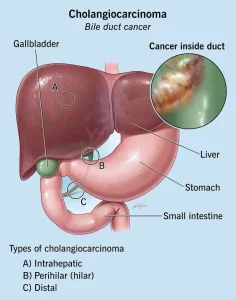
Cholangiocarcinoma, also known as bile duct cancer, is a rare and aggressive cancer that develops in the bile ducts, which carry bile from the liver to the gallbladder and small intestine. It can arise inside the liver (intrahepatic), at the junction where bile ducts exit the liver (perihilar), or outside the liver (distal). Cholangiocarcinoma often progresses silently in its early stages, leading to delayed diagnosis and limited treatment options.
Symptoms
Symptoms of cholangiocarcinoma usually appear as the disease advances and bile flow becomes obstructed.
Common symptoms include:
-
Jaundice, causing yellowing of the skin and eyes
-
Dark urine and pale-colored stools
-
Itchy skin
-
Abdominal pain, especially in the upper right side
-
Unexplained weight loss
-
Loss of appetite
-
Fatigue
In advanced stages, symptoms may worsen due to liver dysfunction or cancer spread.
Causes
Cholangiocarcinoma develops due to abnormal and uncontrolled growth of bile duct cells. Chronic inflammation and bile duct damage are believed to play a significant role.
Known causes include:
-
Long-standing inflammation of the bile ducts
-
Genetic mutations affecting bile duct cells
-
Prolonged exposure to toxic bile acids
In many cases, the exact cause remains unknown.
Risk Factors
Certain conditions and exposures increase the risk of developing cholangiocarcinoma.
Key risk factors include:
-
Primary sclerosing cholangitis
-
Chronic liver disease or cirrhosis
-
Congenital bile duct abnormalities
-
Bile duct stones
-
Parasitic liver infections
-
Increasing age
-
Smoking
Risk factors vary depending on the location of the tumor within the bile ducts.
Complications
Cholangiocarcinoma can lead to serious complications due to bile obstruction and cancer progression.
Possible complications include:
-
Severe jaundice and liver failure
-
Recurrent bile duct infections
-
Malnutrition due to impaired digestion
-
Spread of cancer to nearby organs or distant sites
-
Reduced quality of life
Advanced disease often requires complex medical management.
Prevention
There is no guaranteed way to prevent cholangiocarcinoma, but reducing risk factors and managing underlying conditions may lower the risk.
Preventive strategies include:
-
Early diagnosis and treatment of bile duct diseases
-
Managing chronic liver conditions under medical supervision
-
Avoiding smoking and excessive alcohol consumption
-
Regular medical follow-up for individuals with known risk factors
Early recognition of symptoms and timely medical evaluation are essential for improving outcomes in cholangiocarcinoma.
Request an appointment
Advertisement
