
Overview
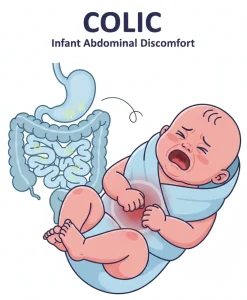
Colic is a common condition in infants characterized by frequent, prolonged, and intense crying or fussiness without an apparent cause. It usually begins in the first few weeks of life and often resolves by three to four months of age.
While colic is distressing for both the baby and caregivers, it is generally harmless and does not indicate an underlying medical problem. The exact cause is not fully understood, but it may involve digestive discomfort, sensitivity to stimulation, or immature nervous system development.
Symptoms
Colic is typically identified by a pattern of crying that occurs regularly and is difficult to soothe.
Common symptoms include:
-
Intense, inconsolable crying, often in the late afternoon or evening
-
Crying episodes lasting three or more hours per day, at least three days a week, for three weeks or longer
-
Clenched fists, arched back, or stiffened legs during crying
-
Facial redness during crying
-
Increased fussiness after feeding
-
Difficulty sleeping or frequent waking
Infants with colic are otherwise healthy, feed well, and gain weight normally.
Causes
The exact cause of colic is unknown, but several factors may contribute:
-
Immature digestive system causing gas or discomfort
-
Sensitivity to formula or breast milk components
-
Overstimulation from lights, sounds, or activity
-
Changes in the nervous system affecting pain perception
-
Parental stress or anxiety, which may influence infant behavior
Colic is not caused by neglect or improper care.
Risk Factors
Certain factors may increase the likelihood of colic:
-
Firstborn infants
-
Premature birth or low birth weight
-
Family history of colic
-
Maternal smoking during pregnancy or after birth
-
Infant temperament and sensitivity to environmental stimuli
Complications
Colic itself is not harmful, but it can cause challenges for both the infant and caregivers.
Possible complications include:
-
Parental stress, fatigue, or anxiety
-
Sleep disruption for both baby and caregivers
-
Strained parent-infant bonding if crying is difficult to soothe
-
Rare risk of accidental harm due to frustration (e.g., shaken baby syndrome, which is preventable with proper coping strategies)
Prevention
There is no guaranteed way to prevent colic, but certain strategies can reduce the frequency or intensity of crying episodes:
-
Ensuring proper feeding techniques to reduce swallowed air
-
Burping the baby frequently during and after feeds
-
Maintaining a calm, soothing environment
-
Using gentle rocking, swaddling, or pacifiers
-
Minimizing overstimulation from lights, sounds, or activity
-
Caregivers taking breaks to reduce stress and maintain patience
Most infants outgrow colic by four to six months of age, and symptoms usually resolve without long-term effects.
Advertisement
