
Overview
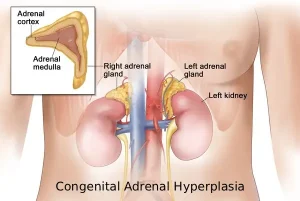
Congenital adrenal hyperplasia (CAH) is a group of inherited genetic disorders that affect the adrenal glands, which are responsible for producing hormones such as cortisol, aldosterone, and androgens. In CAH, enzyme deficiencies disrupt normal hormone production, leading to hormonal imbalances that can affect growth, development, and metabolism. The condition is usually present at birth, though milder forms may be diagnosed later in life.
Symptoms
Symptoms of congenital adrenal hyperplasia vary depending on the type and severity of the enzyme deficiency. Common symptoms may include:
-
Ambiguous genitalia in newborn females
-
Early puberty or rapid childhood growth with early closure of growth plates
-
Excess body or facial hair
-
Severe acne
-
Irregular menstrual periods in females
-
Low blood pressure, dehydration, or salt loss in severe forms
-
Fatigue, weakness, or poor weight gain in infants
Causes
Congenital adrenal hyperplasia is caused by inherited mutations in genes that code for enzymes needed to produce adrenal hormones. The most common form results from 21-hydroxylase deficiency. These enzyme defects lead to reduced cortisol and sometimes aldosterone production, with excess androgen production as a result. CAH is inherited in an autosomal recessive pattern.
Risk Factors
Factors that increase the likelihood of congenital adrenal hyperplasia include:
-
Family history of CAH
-
Both parents carrying a mutation in a CAH-related gene
-
Belonging to certain populations with higher carrier rates
-
Previous child in the family diagnosed with CAH
Complications
Without proper treatment, congenital adrenal hyperplasia can result in several complications:
-
Adrenal crisis with severe dehydration, low blood pressure, and shock
-
Abnormal growth patterns and short adult height
-
Fertility issues in both males and females
-
Metabolic problems and obesity
-
Psychological and social challenges related to physical development
Prevention
Congenital adrenal hyperplasia cannot be prevented because it is a genetic condition. However, early detection and management can prevent serious complications. Preventive approaches focus on:
-
Newborn screening for early diagnosis
-
Genetic counseling for families with a history of CAH
-
Regular medical follow-up and hormone level monitoring
-
Adherence to prescribed hormone replacement therapy
Request an appointment
Advertisement
