
Overview
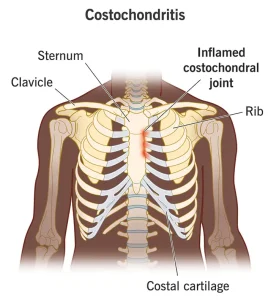
Costochondritis is an inflammation of the cartilage that connects the ribs to the breastbone (sternum). This condition commonly causes chest pain that may feel sharp, aching, or pressure-like and can sometimes be mistaken for heart-related pain. Although costochondritis can be uncomfortable and alarming, it is generally harmless and not related to heart disease. It can affect people of all ages but is more frequently seen in adolescents and adults over 40.
Symptoms
The main symptom of costochondritis is chest wall pain that originates where the ribs meet the sternum. The pain may vary in intensity and duration.
Common symptoms include:
-
Sharp, aching, or pressure-like pain on the front of the chest
-
Pain that worsens with deep breathing, coughing, sneezing, or physical activity
-
Tenderness when pressing on the affected rib joints
-
Pain that may radiate to the shoulders, arms, or back
-
Discomfort that improves with rest or shallow breathing
Unlike heart-related chest pain, costochondritis pain is usually reproducible by touching the chest area.
Causes
The exact cause of costochondritis is often unknown. However, several factors may contribute to the development of inflammation in the rib cartilage.
Possible causes include:
-
Repetitive physical strain or overuse, such as heavy lifting or intense exercise
-
Chest injury or trauma, including accidents or falls
-
Severe or persistent coughing
-
Upper respiratory infections
-
Viral, bacterial, or fungal infections affecting the chest wall
-
Inflammatory conditions such as arthritis
In many cases, no clear trigger is identified.
Risk factors
Certain factors may increase the likelihood of developing costochondritis.
Risk factors include:
-
Age over 40, though it can occur at any age
-
Female sex
-
Repetitive physical activities involving the upper body
-
Recent chest injury or surgery
-
Respiratory infections with frequent coughing
-
Chronic inflammatory or rheumatologic conditions
Complications
Costochondritis itself rarely leads to serious complications. However, ongoing symptoms can impact daily life.
Potential complications include:
-
Persistent or recurrent chest pain affecting quality of life
-
Anxiety or stress due to fear of heart disease
-
Reduced physical activity because of pain
-
Misdiagnosis or delayed diagnosis of other chest conditions if symptoms are ignored
Any new, severe, or unexplained chest pain should always be medically evaluated to rule out serious causes.
Prevention
There is no guaranteed way to prevent costochondritis, but certain measures may help reduce the risk or prevent recurrence.
Helpful preventive steps include:
-
Avoiding repetitive strain or heavy lifting that stresses the chest wall
-
Using proper posture and ergonomics during work and exercise
-
Gradually increasing intensity when starting new physical activities
-
Treating respiratory infections promptly to reduce prolonged coughing
-
Practicing gentle stretching and strengthening exercises for the chest and upper body
Early attention to chest discomfort and appropriate rest may help limit symptom severity and duration.
Request an appointment
Advertisement
