
Overview
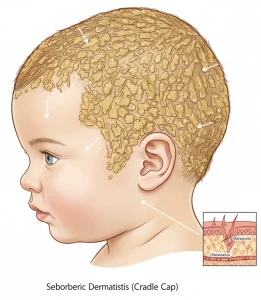
Cradle cap is a common, harmless skin condition that affects infants, usually within the first few months of life. It appears as scaly, greasy patches on a baby’s scalp and is a form of seborrheic dermatitis. Although it may look uncomfortable, cradle cap is not itchy or painful for most babies and does not cause distress. The condition often resolves on its own over time and is not contagious.
Symptoms
Cradle cap mainly affects the scalp but may occasionally extend to other areas.
Common symptoms include:
-
Thick, greasy, yellow or white scales on the scalp
-
Crusty patches that may flake off
-
Mild redness under the scales
-
Scales that may spread to the eyebrows, eyelids, ears, or neck folds
-
Temporary hair loss in affected areas
Babies with cradle cap usually appear comfortable and do not show signs of irritation.
Causes
The exact cause of cradle cap is not fully understood, but several factors are believed to contribute.
Possible causes include:
-
Overactive oil glands in the skin and hair follicles
-
Influence of maternal hormones passed to the baby before birth
-
Growth of yeast on the skin that thrives in oily areas
-
Immature skin barrier in infants
Cradle cap is not caused by poor hygiene or allergies.
Risk factors
Certain factors may increase the likelihood of developing cradle cap.
Risk factors include:
-
Being a newborn or young infant
-
Family history of seborrheic dermatitis or eczema
-
Oily skin
-
Presence of other skin conditions such as infant acne
The condition affects babies of all skin types and backgrounds.
Complications
Cradle cap rarely leads to complications and is usually a temporary condition.
Possible complications include:
-
Secondary skin infection if the skin is scratched or irritated
-
Worsening redness or inflammation if harsh products are used
-
Spread of scales to other areas of the body
If the condition persists or becomes severe, medical evaluation may be needed to rule out other skin disorders.
Prevention
Cradle cap cannot always be prevented, but gentle scalp care may help reduce its severity.
Helpful preventive measures include:
-
Washing the baby’s scalp regularly with a mild baby shampoo
-
Gently loosening scales with a soft brush or cloth
-
Avoiding harsh soaps, oils, or adult shampoos
-
Keeping the scalp clean and dry
-
Following healthcare provider advice if medicated treatments are recommended
With proper care, cradle cap usually improves gradually without long-term effects.
Request an appointment
Advertisement
