
Overview
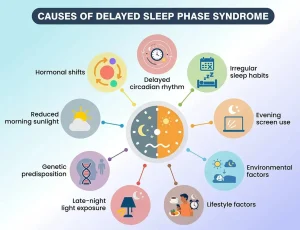
Delayed Sleep Phase, also known as Delayed Sleep Phase Disorder (DSPD), is a circadian rhythm sleep disorder in which a person’s natural sleep–wake cycle is significantly delayed compared to conventional or socially acceptable times. Individuals with this condition have difficulty falling asleep at night and waking up in the morning, despite having normal sleep quality and duration when allowed to follow their preferred schedule. It is commonly seen in adolescents and young adults.
Symptoms
Symptoms of delayed sleep phase are primarily related to sleep timing rather than sleep quality:
-
Difficulty falling asleep until very late at night or early morning
-
Trouble waking up at desired or required times
-
Excessive daytime sleepiness
-
Fatigue or low energy during the day
-
Poor concentration or memory problems
-
Irritability or mood changes
-
Improved alertness and performance in the evening or at night
Causes
Delayed sleep phase occurs due to misalignment between the internal biological clock and external time cues:
-
Altered circadian rhythm regulation
-
Genetic predisposition affecting sleep timing
-
Reduced sensitivity to morning light
-
Excessive exposure to screens or artificial light at night
-
Irregular sleep schedules
-
Behavioral habits such as late-night activities
Risk Factors
Several factors increase the likelihood of developing delayed sleep phase:
-
Adolescence and young adulthood
-
Family history of circadian rhythm disorders
-
Excessive evening use of electronic devices
-
Limited exposure to morning sunlight
-
Anxiety, depression, or attention-related disorders
-
Irregular work or school schedules
Complications
If unmanaged, delayed sleep phase can lead to multiple functional and health-related issues:
-
Chronic sleep deprivation
-
Poor academic or work performance
-
Increased risk of depression or anxiety
-
Social and occupational difficulties
-
Increased reliance on caffeine or stimulants
-
Reduced overall quality of life
Prevention
Preventive strategies focus on supporting a healthy circadian rhythm:
-
Maintaining consistent sleep and wake times
-
Increasing exposure to natural light in the morning
-
Limiting screen use and bright lights in the evening
-
Avoiding caffeine late in the day
-
Establishing a calming bedtime routine
-
Seeking early evaluation if sleep problems persist
Request an appointment
Advertisement
