
Overview
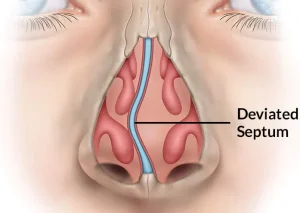
A deviated septum is a condition in which the nasal septum, the wall of cartilage and bone that divides the nasal cavity into two nostrils, is displaced to one side. This can reduce airflow through one or both nostrils and may interfere with normal breathing. A deviated septum can be present from birth or result from injury to the nose.
Symptoms
Symptoms vary depending on the severity of the deviation:
-
Nasal congestion, often worse on one side
-
Difficulty breathing through the nose
-
Frequent nosebleeds
-
Facial pain or pressure
-
Noisy breathing during sleep
-
Snoring
-
Recurrent sinus infections
-
Headaches in some individuals
Causes
A deviated septum develops due to structural changes in the nasal septum:
-
Congenital displacement present at birth
-
Injury to the nose from trauma or accidents
-
Pressure during childbirth
-
Uneven growth of nasal structures
-
Previous nasal surgery in rare cases
Risk Factors
Certain factors increase the likelihood of having a deviated septum:
-
History of nasal trauma
-
Participation in contact sports
-
Family history of nasal structural abnormalities
-
Chronic nasal inflammation
-
Previous nasal injuries during childhood
Complications
If untreated, a deviated septum may lead to:
-
Chronic nasal obstruction
-
Frequent sinus infections
-
Sleep disturbances
-
Snoring or sleep-disordered breathing
-
Dry mouth due to mouth breathing
-
Reduced quality of life
Prevention
While not all cases can be prevented, some measures may reduce risk:
-
Using protective gear during contact sports
-
Avoiding situations that increase the risk of facial injury
-
Seeking early treatment after nasal trauma
-
Managing nasal allergies effectively
Request an appointment
Advertisement
