
Overview
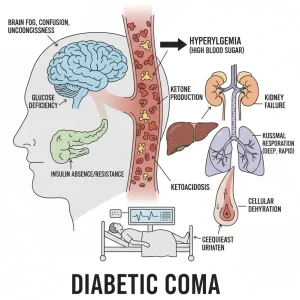
Diabetic coma is a life-threatening complication of diabetes that occurs when blood glucose levels become extremely high or dangerously low, leading to loss of consciousness. It can develop in people with type 1 or type 2 diabetes and requires immediate medical attention. Diabetic coma is often the result of untreated or poorly controlled diabetes-related emergencies.
Symptoms
Symptoms may develop gradually or suddenly and often worsen before loss of consciousness:
-
Extreme fatigue or weakness
-
Confusion or disorientation
-
Severe thirst
-
Frequent urination
-
Nausea or vomiting
-
Rapid or deep breathing
-
Fruity-smelling breath
-
Cold, clammy skin in low blood sugar states
-
Loss of consciousness
Causes
Diabetic coma can occur due to severe imbalances in blood glucose levels:
-
Extremely high blood sugar levels
-
Diabetic ketoacidosis
-
Hyperosmolar hyperglycemic state
-
Severe hypoglycemia
-
Missed insulin doses or improper medication use
-
Serious infections or illness
-
Excessive alcohol intake
Risk Factors
Certain factors increase the risk of developing diabetic coma:
-
Poorly controlled diabetes
-
Skipping insulin or diabetes medications
-
Infections or severe illness
-
Alcohol or drug misuse
-
Lack of regular blood glucose monitoring
-
Previous episodes of severe hypoglycemia or hyperglycemia
Complications
If not treated promptly, diabetic coma can lead to severe outcomes:
-
Brain damage
-
Organ failure
-
Heart rhythm disturbances
-
Permanent neurological impairment
-
Increased risk of death
-
Prolonged hospitalization
Prevention
Preventive measures focus on effective diabetes management and early intervention:
-
Regular blood glucose monitoring
-
Adhering to prescribed diabetes treatment plans
-
Recognizing early warning signs of blood sugar extremes
-
Managing infections promptly
-
Avoiding excessive alcohol consumption
-
Educating family members on emergency response
-
Seeking immediate medical care when symptoms worsen
Advertisement
