
Overview
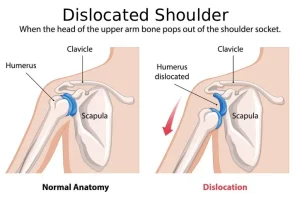
A dislocated shoulder occurs when the upper arm bone is forced out of its normal position in the shoulder socket. It is one of the most commonly dislocated joints due to the shoulder’s wide range of motion. Dislocated shoulders often result from trauma or sudden force and require prompt medical attention to prevent further injury.
Symptoms
Symptoms are usually immediate and can be severe:
-
Intense shoulder pain
-
Visible deformity or out-of-place shoulder
-
Swelling or bruising
-
Inability to move the arm
-
Weakness in the shoulder or arm
-
Numbness or tingling if nerves are affected
-
Muscle spasms around the shoulder
Causes
A dislocated shoulder typically occurs due to forceful injury:
-
Falls onto an outstretched arm
-
Direct blow to the shoulder
-
Sports injuries
-
Motor vehicle accidents
-
Sudden pulling or twisting of the arm
-
Previous shoulder instability
Risk Factors
Several factors increase the likelihood of shoulder dislocation:
-
Participation in contact or overhead sports
-
Previous shoulder dislocations
-
Weak shoulder muscles or ligaments
-
Young age, especially in athletes
-
High-impact activities
Complications
If not properly treated, a dislocated shoulder may lead to:
-
Recurrent shoulder dislocations
-
Damage to surrounding ligaments or tendons
-
Nerve or blood vessel injury
-
Chronic shoulder instability
-
Arthritis of the shoulder joint
-
Reduced range of motion
Prevention
Preventive measures focus on strengthening and protecting the shoulder:
-
Strengthening shoulder and upper back muscles
-
Practicing proper techniques during sports
-
Using protective gear when appropriate
-
Avoiding high-risk activities when injured
-
Completing rehabilitation after shoulder injuries
Advertisement
