
Overview
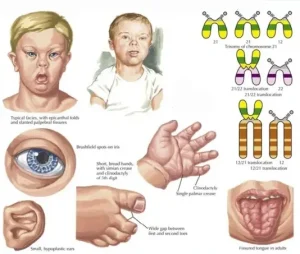
Down syndrome is a genetic condition caused by the presence of an extra copy of chromosome 21, a situation known as trisomy 21. This additional genetic material affects physical growth, facial features, and cognitive development. Down syndrome is one of the most common chromosomal conditions and varies widely in its effects, with individuals showing different abilities, health challenges, and levels of independence.
Symptoms
The signs and characteristics of Down syndrome can differ from person to person and may range from mild to more significant. Common features include:
-
Distinct facial features such as a flat facial profile and upward-slanting eyes
-
Low muscle tone, especially in infancy
-
Short stature and smaller hands and feet
-
Single deep crease across the palm
-
Delayed development of motor skills and speech
-
Mild to moderate intellectual disability
-
Increased susceptibility to infections
Some individuals may also have vision or hearing difficulties.
Causes
Down syndrome is caused by an error in cell division that results in an extra chromosome 21. There are three main genetic types:
-
Trisomy 21, where every cell has an extra copy of chromosome 21
-
Translocation Down syndrome, where part of chromosome 21 attaches to another chromosome
-
Mosaic Down syndrome, where only some cells have an extra chromosome 21
This genetic change occurs randomly and is not caused by anything the parents did before or during pregnancy.
Risk Factors
Certain factors are associated with a higher likelihood of having a child with Down syndrome:
-
Increased maternal age, particularly age 35 and older
-
Previous pregnancy affected by Down syndrome
-
Parents who are carriers of a chromosomal translocation
Despite these factors, Down syndrome can occur in pregnancies at any maternal age.
Complications
People with Down syndrome may be at increased risk for certain medical conditions, though not everyone is affected:
-
Congenital heart defects
-
Gastrointestinal abnormalities
-
Thyroid disorders
-
Hearing and vision problems
-
Sleep apnea
-
Increased risk of leukemia
-
Higher likelihood of developing early-onset Alzheimer’s disease
Ongoing medical care helps detect and manage these conditions early.
Prevention
There is no way to prevent Down syndrome, as it is a genetic condition that occurs before birth. However, supportive measures can improve health outcomes and quality of life:
-
Prenatal screening and diagnostic testing for early identification
-
Early intervention programs including physical, occupational, and speech therapy
-
Regular health screenings and preventive medical care
-
Educational support tailored to individual needs
-
Family counseling and community support services
With appropriate medical care, education, and social support, many individuals with Down syndrome lead fulfilling and productive lives.
Advertisement
