
Overview
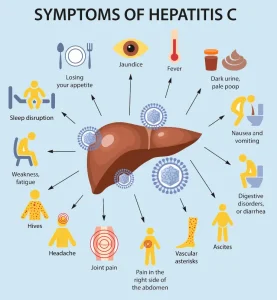
Hepatitis C is a viral infection that primarily affects the liver. It is caused by the hepatitis C virus and can lead to inflammation and damage of liver tissue. Many people with hepatitis C are unaware they are infected because symptoms may not appear for years.
The infection can be short-term or become chronic. Chronic hepatitis C can result in serious liver problems, including cirrhosis and liver cancer. Advances in antiviral treatment have made hepatitis C highly curable when detected early.
Symptoms
Many people with hepatitis C have no noticeable symptoms, especially in the early stages. When symptoms do occur, they may be mild and develop slowly.
Common symptoms include:
-
Fatigue
-
Fever
-
Loss of appetite
-
Nausea
-
Abdominal discomfort
-
Dark urine
-
Pale stools
-
Joint pain
-
Yellowing of the skin and eyes
Symptoms of chronic hepatitis C may not appear until significant liver damage has occurred.
Causes
Hepatitis C is caused by infection with the hepatitis C virus.
The virus is spread through:
-
Contact with infected blood
-
Sharing needles, syringes or other drug-injection equipment
-
Blood transfusions or organ transplants received before routine screening
-
Accidental needle-stick injuries
-
Sharing personal items that may have blood on them
-
Transmission from mother to baby during childbirth
Hepatitis C is not spread through casual contact such as hugging or sharing food.
Risk factors
Factors that increase the risk of hepatitis C include:
-
Injection drug use
-
Receiving blood products before widespread screening
-
Long-term kidney dialysis
-
Healthcare exposure to blood
-
Being born to a mother with hepatitis C
-
Getting tattoos or piercings with unsterilized equipment
-
Having multiple sexual partners, especially with other risk factors present
Anyone at risk should consider screening.
Complications
Chronic hepatitis C can lead to serious and life-threatening liver complications.
Possible complications include:
-
Chronic liver inflammation
-
Liver scarring, known as cirrhosis
-
Liver failure
-
Liver cancer
-
Increased risk of death related to liver disease
Early diagnosis and effective treatment greatly reduce the risk of complications.
Prevention
There is no vaccine for hepatitis C, but steps can be taken to reduce the risk of infection.
Preventive measures include:
-
Avoiding sharing needles or drug equipment
-
Practicing safe sex
-
Using only sterile equipment for tattoos and piercings
-
Following safety precautions in healthcare settings
-
Screening blood products and organ donations
-
Getting tested if at risk
Early detection and treatment help prevent long-term liver damage and reduce transmission.
Advertisement
