
Overview
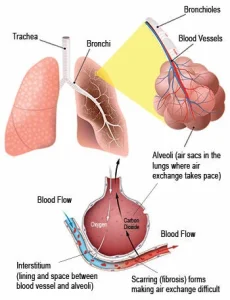
Interstitial lung disease (ILD) refers to a group of disorders that cause progressive scarring (fibrosis) of the lung tissue, particularly affecting the interstitium, which is the tissue surrounding the air sacs. This scarring leads to stiffness in the lungs, making it difficult to breathe and deliver oxygen to the bloodstream. ILD can be caused by long-term exposure to irritants, autoimmune diseases, or have no identifiable cause (idiopathic).
Symptoms
-
Shortness of breath, especially during exertion
-
Persistent dry cough
-
Fatigue or weakness
-
Unexplained weight loss
-
Discomfort or tightness in the chest
-
Clubbing of fingers (in some chronic cases)
Causes
Interstitial lung disease can develop from various factors, including:
-
Long-term exposure to environmental or occupational irritants such as asbestos, silica, or dust
-
Autoimmune or connective tissue diseases like rheumatoid arthritis or scleroderma
-
Certain medications, such as chemotherapy drugs or some antibiotics
-
Radiation therapy to the chest
-
Idiopathic pulmonary fibrosis (when the cause is unknown)
Risk factors
-
Age over 50 years
-
Smoking
-
Occupational or environmental exposure to lung irritants
-
Family history of ILD
-
History of autoimmune or connective tissue disorders
Complications
-
Progressive respiratory failure
-
Pulmonary hypertension (high blood pressure in the lungs)
-
Increased risk of infections
-
Reduced exercise tolerance and quality of life
-
Respiratory or heart complications in severe cases
Prevention
While some causes of interstitial lung disease cannot be prevented, steps to reduce risk include:
-
Avoiding smoking
-
Using protective equipment in workplaces with dust, fumes, or chemicals
-
Prompt management of autoimmune or connective tissue disorders
-
Regular monitoring if taking medications known to affect the lungs
-
Seeking early medical attention for persistent cough or shortness of breath
Early diagnosis and treatment can help slow the progression of ILD, manage symptoms, and improve lung function and quality of life.
Advertisement
