
Overview
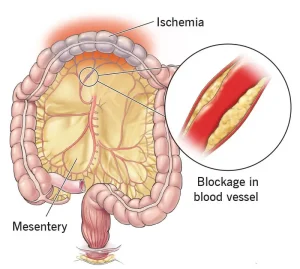
Intestinal ischemia is a serious medical condition that occurs when blood flow to part of the intestines is reduced or blocked. This decrease in blood supply limits oxygen delivery to intestinal tissues, leading to inflammation, injury, and tissue death if not treated promptly. Intestinal ischemia can affect the small intestine, large intestine, or both and may develop suddenly (acute) or gradually (chronic).
Symptoms
Symptoms vary depending on the type and severity of ischemia but may include:
-
Sudden or gradual abdominal pain
-
Abdominal cramping after eating
-
Nausea and vomiting
-
Diarrhea or bloody stools
-
Abdominal tenderness or swelling
-
Urgent need to pass stools
-
Unintended weight loss in chronic cases
Causes
Intestinal ischemia occurs when blood flow through intestinal arteries or veins is impaired. Common causes include:
-
Blood clots blocking intestinal arteries or veins
-
Atherosclerosis causing narrowing of blood vessels
-
Low blood pressure reducing blood flow to the intestines
-
Heart failure or irregular heart rhythms
-
Abdominal surgery or trauma affecting blood vessels
-
Hernias or intestinal twisting that compress blood supply
Risk factors
-
Advanced age
-
Smoking
-
High cholesterol or atherosclerosis
-
Heart disease or abnormal heart rhythms
-
Low blood pressure episodes
-
Diabetes
-
Blood clotting disorders
Complications
-
Intestinal tissue death (necrosis)
-
Perforation of the intestine
-
Severe infection or sepsis
-
Chronic digestive problems
-
Short bowel syndrome if surgical removal is required
-
Increased risk of death in severe untreated cases
Prevention
While intestinal ischemia cannot always be prevented, certain measures may reduce risk:
-
Managing cardiovascular risk factors such as high blood pressure and cholesterol
-
Quitting smoking
-
Maintaining a healthy weight and balanced diet
-
Staying well hydrated
-
Managing heart conditions and blood clotting disorders
-
Seeking prompt medical attention for unexplained abdominal pain
Early diagnosis and treatment are critical in intestinal ischemia to restore blood flow, prevent complications, and improve outcomes.
Advertisement
