
Overview
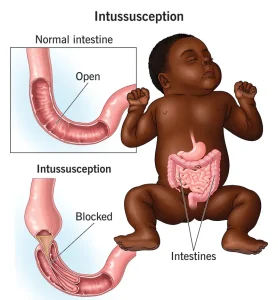
Intussusception is a serious condition in which one part of the intestine slides into an adjacent part, much like the sections of a telescope. This leads to intestinal blockage, swelling, and reduced blood supply to the affected area. Intussusception most commonly occurs in infants and young children, but it can also affect adults. Prompt diagnosis and treatment are essential to prevent life-threatening complications.
Symptoms
Symptoms often appear suddenly and may vary by age. Common signs include:
-
Sudden, severe abdominal pain that comes and goes
-
Crying episodes with knees drawn to the chest in infants
-
Vomiting, which may become bile-stained
-
Abdominal swelling or tenderness
-
Bloody or mucus-filled stools, often described as currant jelly stools
-
Lethargy or weakness
-
Fever in advanced cases
Causes
In many children, the exact cause is unknown. In adults, an underlying condition is more likely. Causes may include:
-
Enlarged lymph tissue in the intestine after viral infection
-
Intestinal polyps or tumors
-
Meckel’s diverticulum
-
Scar tissue or adhesions
-
Intestinal infections or inflammation
-
Previous abdominal surgery
Risk factors
-
Age under 2 years
-
Male sex
-
Recent viral or gastrointestinal infection
-
Congenital intestinal abnormalities
-
Family history of intussusception
-
Certain genetic conditions affecting the intestines
Complications
-
Intestinal obstruction
-
Reduced blood flow leading to tissue death
-
Bowel perforation
-
Severe infection or sepsis
-
Dehydration and electrolyte imbalance
Prevention
Intussusception cannot always be prevented, but early detection reduces the risk of complications. Preventive measures include:
-
Prompt medical evaluation of severe or recurrent abdominal pain in children
-
Early treatment of intestinal infections and inflammation
-
Regular follow-up for children with known intestinal abnormalities
-
Seeking immediate care for symptoms such as bloody stools or persistent vomiting
Intussusception is a medical emergency. Early treatment, often with imaging-guided reduction or surgery, greatly improves outcomes and reduces the risk of serious complications.
Advertisement
