
Overview
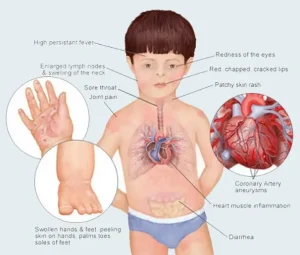
Kawasaki disease is an acute inflammatory illness that primarily affects young children, usually under the age of five. It causes inflammation of blood vessels throughout the body and can lead to serious heart complications if not treated promptly. Kawasaki disease is one of the leading causes of acquired heart disease in children. Early diagnosis and treatment significantly reduce the risk of long-term cardiovascular problems.
Symptoms
Symptoms typically develop in stages and may include:
-
Persistent high fever lasting more than five days
-
Red eyes without discharge
-
Red, cracked lips and strawberry tongue
-
Swollen, red hands and feet with skin peeling
-
Rash on the body or genital area
-
Swollen lymph nodes in the neck
-
Irritability and fatigue
Causes
The exact cause of Kawasaki disease is unknown. It is believed to result from an abnormal immune response, possibly triggered by an infection in genetically susceptible children. Kawasaki disease is not considered contagious.
Risk factors
-
Children under 5 years of age
-
Male sex
-
Asian or Pacific Island ancestry
-
Family history of Kawasaki disease
-
Seasonal patterns, often in winter and early spring
Complications
-
Coronary artery aneurysms
-
Myocarditis or inflammation of the heart muscle
-
Heart valve problems
-
Irregular heart rhythms
-
Increased risk of heart attack later in life
Prevention
There is no known way to prevent Kawasaki disease. The risk of complications can be reduced by:
-
Seeking immediate medical care for prolonged fever in young children
-
Early diagnosis and timely treatment with intravenous immunoglobulin
-
Regular cardiac monitoring during and after recovery
-
Long-term follow-up for children with heart involvement
With prompt treatment, most children recover fully from Kawasaki disease, though ongoing medical follow-up may be required to monitor heart health.
Advertisement
