
Overview
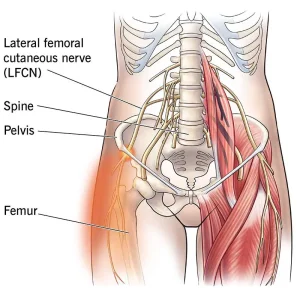
Meralgia paresthetica is a neurological condition caused by compression or irritation of the lateral femoral cutaneous nerve, which supplies sensation to the outer thigh. This condition affects sensation only and does not involve muscle weakness. It commonly results in pain, burning, tingling, or numbness along the outer part of the thigh. Meralgia paresthetica is usually not serious but can be uncomfortable and disruptive to daily activities.
Symptoms
Symptoms typically affect one side of the body and may worsen with standing or walking for long periods.
Common symptoms may include
-
Burning or aching pain on the outer thigh
-
Tingling or pins-and-needles sensation
-
Numbness or reduced skin sensation
-
Increased sensitivity to touch or light clothing
-
Symptoms that worsen with prolonged standing, walking, or hip extension
-
Relief of symptoms when sitting or loosening tight clothing
Causes
Meralgia paresthetica occurs when the lateral femoral cutaneous nerve becomes compressed as it passes through the pelvis and into the thigh.
Common causes include
-
Tight clothing, belts, or tool belts
-
Obesity or significant weight gain
-
Pregnancy
-
Prolonged standing or walking
-
Scar tissue near the inguinal ligament
-
Diabetes-related nerve damage
-
Previous pelvic or hip surgery
Risk Factors
Certain factors increase the likelihood of developing meralgia paresthetica.
Key risk factors include
-
Overweight or obesity
-
Pregnancy
-
Wearing tight-fitting garments regularly
-
Occupations requiring prolonged standing or walking
-
Diabetes mellitus
-
Older age
Complications
Meralgia paresthetica is not usually associated with serious complications, but persistent symptoms can affect comfort and quality of life.
Possible complications include
-
Chronic thigh pain
-
Persistent numbness or altered sensation
-
Sleep disturbances due to discomfort
-
Reduced physical activity due to pain
Prevention
In many cases, meralgia paresthetica can be prevented by reducing pressure on the affected nerve.
Preventive measures may include
-
Wearing loose-fitting clothing
-
Maintaining a healthy body weight
-
Avoiding prolonged standing or repetitive hip movements
-
Taking breaks during activities that strain the hips
-
Managing blood sugar levels in people with diabetes
Early recognition and lifestyle adjustments can often relieve symptoms and prevent recurrence of meralgia paresthetica.
Advertisement
