
Overview
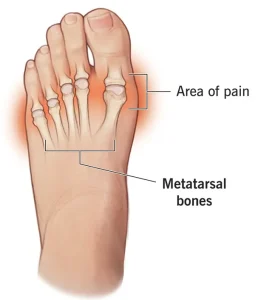
Metatarsalgia is a condition characterized by pain and inflammation in the ball of the foot, the area just behind the toes. It commonly occurs when excessive pressure is placed on the metatarsal bones, which play a key role in supporting body weight during walking, running, and standing.
Metatarsalgia is not a disease itself but a symptom of underlying foot stress or biomechanical imbalance. It can affect one or both feet and is frequently seen in physically active individuals and people who wear improper footwear.
Symptoms
Symptoms of metatarsalgia usually develop gradually and worsen with activity.
Common symptoms include:
-
Sharp, aching, or burning pain in the ball of the foot
-
Pain that increases with standing, walking, or running
-
Feeling of walking on a pebble or hard surface
-
Numbness or tingling in the toes
-
Pain that improves with rest
-
Swelling or tenderness in the forefoot area
Symptoms may become more noticeable when walking barefoot or wearing tight shoes.
Causes
Metatarsalgia develops when excessive or uneven pressure is applied to the metatarsal heads.
Common causes include:
-
High-impact activities such as running or jumping
-
Wearing high heels or narrow, ill-fitting shoes
-
Foot deformities such as high arches, flat feet, or bunions
-
Excess body weight increasing pressure on the forefoot
-
Stress fractures of the metatarsal bones
-
Arthritis affecting the foot joints
-
Improper foot mechanics or abnormal gait
Often, multiple factors contribute to the development of the condition.
Risk Factors
Certain factors increase the likelihood of developing metatarsalgia.
Key risk factors include:
-
Participation in sports that involve running or jumping
-
Wearing unsupportive or poorly cushioned footwear
-
Aging, due to loss of natural fat padding in the foot
-
Obesity or rapid weight gain
-
Foot structure abnormalities
-
Previous foot injuries
Both men and women can be affected, though footwear choices may influence risk.
Complications
If left untreated, metatarsalgia can lead to ongoing discomfort and secondary foot problems.
Possible complications include:
-
Chronic foot pain limiting daily activities
-
Altered walking pattern, leading to knee, hip, or back pain
-
Development of calluses or corns
-
Increased risk of stress fractures
-
Reduced physical activity and fitness levels
Early management helps prevent progression and long-term issues.
Prevention
Metatarsalgia can often be prevented by reducing stress on the forefoot and maintaining good foot health.
Preventive measures include:
-
Wearing well-fitting shoes with adequate cushioning and arch support
-
Avoiding prolonged use of high-heeled or narrow shoes
-
Using shock-absorbing insoles or metatarsal pads
-
Maintaining a healthy body weight
-
Gradually increasing intensity of physical activities
-
Stretching and strengthening foot and calf muscles
-
Replacing worn-out athletic shoes regularly
Proper footwear and attention to foot mechanics play a crucial role in preventing metatarsalgia.
Advertisement
