
Overview
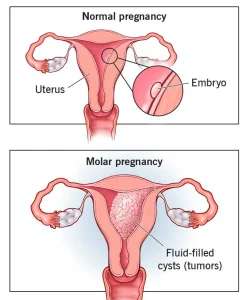
Molar pregnancy is a rare complication of pregnancy that occurs when abnormal tissue grows inside the uterus instead of a normal embryo. It is a type of gestational trophoblastic disease and results from an error during fertilization that leads to abnormal development of placental tissue.
There are two main types of molar pregnancy: complete and partial. In a complete molar pregnancy, no normal fetal tissue forms, while in a partial molar pregnancy, abnormal placental tissue grows alongside some fetal tissue that cannot develop normally. Molar pregnancy cannot result in a viable pregnancy and requires medical treatment.
Symptoms
Symptoms of a molar pregnancy often appear during the first trimester and may resemble or be more severe than typical pregnancy symptoms.
Common symptoms include:
-
Vaginal bleeding during early pregnancy
-
Rapid growth of the uterus larger than expected for gestational age
-
Severe nausea and vomiting
-
Pelvic pressure or pain
-
Passage of grape-like tissue from the vagina
-
Absence of fetal heartbeat
-
Signs of pregnancy-related high blood pressure early in pregnancy
Some cases are detected during routine ultrasound before symptoms become severe.
Causes
Molar pregnancy is caused by abnormal fertilization, leading to an incorrect number or arrangement of chromosomes.
Key causes include:
-
Fertilization of an egg with no genetic material by one or two sperm
-
Abnormal duplication of paternal chromosomes
-
Errors in early cell division after fertilization
These genetic abnormalities prevent normal embryo development and cause excessive growth of placental tissue.
Risk Factors
Certain factors increase the risk of developing a molar pregnancy.
Key risk factors include:
-
Maternal age under 20 or over 35
-
Previous molar pregnancy
-
History of miscarriage
-
Nutritional deficiencies, particularly low carotene or vitamin A intake
Although risk factors exist, molar pregnancy can occur without any known risk factors.
Complications
If not treated promptly, molar pregnancy can lead to serious complications.
Possible complications include:
-
Persistent gestational trophoblastic disease
-
Heavy vaginal bleeding
-
Infection
-
Development of invasive molar disease
-
Rare progression to cancerous forms
-
Emotional distress related to pregnancy loss
Ongoing follow-up is essential to monitor hormone levels and ensure complete resolution.
Prevention
There is no guaranteed way to prevent a molar pregnancy, as it results from random genetic errors. However, certain steps can reduce future risk and support recovery.
Preventive and follow-up measures include:
-
Early prenatal care and ultrasound evaluation
-
Careful monitoring after a molar pregnancy
-
Avoiding pregnancy until medically advised
-
Using reliable contraception during follow-up
-
Seeking genetic counseling if there is a history of molar pregnancy
With appropriate treatment and follow-up, most people can have healthy pregnancies in the future.
Advertisement
