
Overview
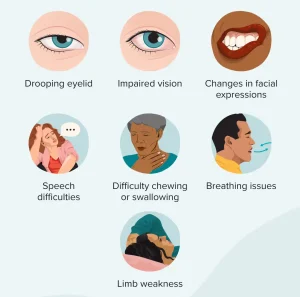
Myasthenia gravis is a chronic autoimmune neuromuscular disorder that causes weakness in voluntary muscles. It occurs when communication between nerves and muscles is disrupted, leading to muscle fatigue that worsens with activity and improves with rest. Muscles that control eye and eyelid movement, facial expression, chewing, swallowing, and speaking are commonly affected.
The condition can affect people of any age, though it is more common in younger women and older men. With proper diagnosis and treatment, many individuals with myasthenia gravis are able to manage symptoms effectively and maintain a good quality of life.
Symptoms
Symptoms of myasthenia gravis often fluctuate and tend to worsen after prolonged muscle use.
Common symptoms include:
-
Drooping of one or both eyelids
-
Double vision
-
Facial muscle weakness
-
Difficulty chewing or swallowing
-
Slurred speech
-
Weakness in the arms, hands, legs, or neck
-
Difficulty holding up the head
-
Shortness of breath in severe cases
Muscle strength typically improves after rest.
Causes
Myasthenia gravis is caused by an abnormal immune response in which antibodies interfere with receptors needed for nerve-to-muscle communication.
Key causes and mechanisms include:
-
Autoantibodies blocking or destroying acetylcholine receptors
-
Reduced ability of muscles to respond to nerve signals
-
Abnormal thymus gland function in many cases
The exact trigger for the immune system malfunction is not always known.
Risk Factors
Several factors may increase the risk of developing myasthenia gravis.
Key risk factors include:
-
Autoimmune conditions
-
Abnormal thymus gland
-
Female sex under 40 years of age
-
Male sex over 60 years of age
-
Family history of autoimmune disorders
The condition is not directly inherited but may be associated with genetic susceptibility.
Complications
If not properly managed, myasthenia gravis can lead to serious complications.
Possible complications include:
-
Myasthenic crisis causing severe breathing difficulty
-
Aspiration pneumonia due to swallowing problems
-
Increased risk of infections
-
Reduced ability to perform daily activities
-
Emotional stress or anxiety related to chronic illness
Prompt treatment reduces the risk of life-threatening complications.
Prevention
There is no known way to prevent myasthenia gravis because it is an autoimmune condition. However, steps can be taken to reduce symptom severity and prevent complications.
Preventive and management strategies include:
-
Taking prescribed medications consistently
-
Avoiding triggers such as stress, infections, and extreme heat
-
Getting adequate rest between activities
-
Monitoring for worsening symptoms
-
Seeking immediate medical care for breathing or swallowing difficulties
-
Attending regular follow-up appointments
Early diagnosis, ongoing medical care, and lifestyle adjustments are essential for managing myasthenia gravis and maintaining long-term health.
Advertisement
