
Overview
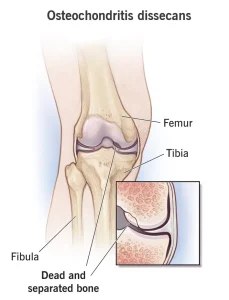
Osteochondritis dissecans is a joint condition in which a small segment of bone and the overlying cartilage loses its blood supply and begins to separate from the surrounding bone. This can lead to pain, swelling, and impaired joint movement. The condition most commonly affects the knee but can also involve the elbow, ankle, or other joints. It is seen more often in children, adolescents, and young adults who are physically active.
Symptoms
Symptoms of osteochondritis dissecans vary depending on the joint involved and the severity of the condition:
-
Joint pain that worsens with activity
-
Swelling or tenderness around the joint
-
Stiffness or limited range of motion
-
Locking, catching, or clicking of the joint
-
Feeling of joint instability or giving way
-
Decreased ability to fully straighten the joint
Causes
The exact cause of osteochondritis dissecans is not fully understood, but several factors are believed to contribute:
-
Repetitive stress or microtrauma to the joint
-
Reduced blood flow to a portion of the bone
-
Genetic predisposition
-
Rapid growth during adolescence
-
Joint alignment abnormalities
Risk Factors
Factors that may increase the risk of developing osteochondritis dissecans include:
-
Participation in high-impact or repetitive sports
-
Age between late childhood and early adulthood
-
Male gender
-
Previous joint injuries
-
Family history of the condition
Complications
If osteochondritis dissecans progresses or remains untreated, it can result in:
-
Loose fragments within the joint
-
Chronic joint pain and swelling
-
Reduced joint mobility
-
Early onset osteoarthritis
-
Long-term functional limitations
Prevention
While osteochondritis dissecans cannot always be prevented, risk reduction strategies may help:
-
Avoiding excessive repetitive stress on joints
-
Using proper techniques and protective equipment during sports
-
Allowing adequate rest and recovery between activities
-
Seeking early evaluation for persistent joint pain
-
Following recommended treatment and activity modification plans
Request an appointment
Advertisement
