
Overview
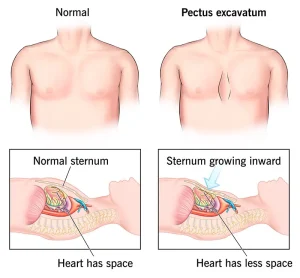
Pectus Excavatum is a structural condition of the chest in which the breastbone (sternum) is sunken inward, giving the chest a caved-in or hollow appearance. It is the most common congenital chest wall abnormality and is often noticed during childhood or adolescence when the body grows rapidly.
The condition occurs when the cartilage that connects the ribs to the breastbone grows abnormally, pulling the sternum inward. In mild cases, Pectus Excavatum may cause mainly cosmetic concerns. In more severe cases, the indentation can press on the heart and lungs, potentially affecting breathing and heart function.
Symptoms
The symptoms of Pectus Excavatum vary depending on how deeply the breastbone is depressed. Some individuals experience few symptoms, while others may notice physical discomfort or breathing difficulties.
Possible symptoms include:
-
A noticeable sunken appearance of the chest
-
Shortness of breath during physical activity
-
Reduced exercise tolerance
-
Chest pain or discomfort
-
Fatigue
-
Rapid heartbeat during exertion
-
Frequent respiratory infections in some cases
Many individuals become more aware of symptoms during adolescence when growth spurts occur.
Causes
Pectus Excavatum develops due to abnormal growth of the cartilage that connects the ribs to the sternum. This abnormal growth pushes the breastbone inward toward the spine, creating the characteristic chest indentation.
The exact cause is not always known, but the condition is believed to involve genetic and developmental factors. In some cases, it may occur alongside connective tissue disorders or other skeletal conditions.
The condition is present at birth, although the indentation may become more noticeable as the child grows.
Risk Factors
Certain factors may increase the likelihood of developing Pectus Excavatum.
These include:
-
Family history of chest wall deformities
-
Male gender, as the condition is more common in males
-
Rapid growth during adolescence
-
Connective tissue disorders such as Marfan syndrome
-
Scoliosis or other skeletal abnormalities
Although these factors may increase risk, many individuals develop the condition without a clear cause.
Complications
Severe cases of Pectus Excavatum can lead to complications that affect the heart, lungs, and overall physical activity.
Possible complications include:
-
Compression of the heart
-
Reduced lung capacity
-
Difficulty breathing during exercise
-
Decreased stamina and endurance
-
Postural problems
-
Psychological distress or self-esteem issues due to chest appearance
In significant cases, medical evaluation may be needed to determine whether treatment or surgery is necessary.
Prevention
There is no known way to prevent Pectus Excavatum because it develops as part of chest wall growth and development before or during early life. However, early monitoring can help manage symptoms and reduce potential complications.
Helpful measures may include:
-
Regular medical checkups during childhood and adolescence
-
Exercises that strengthen chest and back muscles
-
Maintaining good posture to support chest alignment
-
Early medical evaluation if breathing problems or chest discomfort occur
-
Monitoring chest development during growth periods
Early assessment and appropriate treatment can help improve both physical function and quality of life for individuals with Pectus Excavatum.
Advertisement
