
Overview
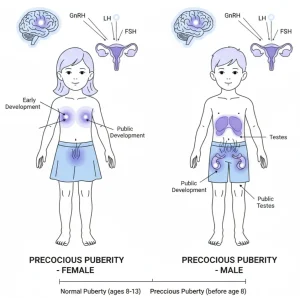
Precocious Puberty is a condition in which a child’s body begins developing into adulthood earlier than normal. Puberty typically starts between ages 8 and 13 in girls and between ages 9 and 14 in boys. When these physical and hormonal changes begin before age 8 in girls or before age 9 in boys, it is considered precocious puberty.
During puberty, the body produces hormones that lead to growth and sexual development. In precocious puberty, these hormonal changes occur earlier than expected, causing early development of secondary sexual characteristics such as breast development in girls or enlargement of the testicles and penis in boys.
There are two main types of precocious puberty. Central precocious puberty occurs when the brain starts the puberty process too early. Peripheral precocious puberty happens when hormones from other parts of the body trigger early development without the normal signals from the brain. Early puberty can affect a child’s physical growth, emotional well-being, and social development. With proper diagnosis and treatment, many children can manage the condition effectively.
Symptoms
The signs of precocious puberty are similar to the normal signs of puberty but occur earlier than usual.
Common symptoms in girls may include:
-
Early breast development
-
Menstruation starting at an unusually young age
-
Rapid growth in height
-
Appearance of pubic or underarm hair
-
Body odor similar to that of teenagers
Common symptoms in boys may include:
-
Enlargement of the testicles and penis
-
Facial, pubic, or underarm hair
-
Deepening of the voice
-
Increased muscle development
-
Rapid growth in height
Other general symptoms may include:
-
Acne
-
Mood changes
-
Adult-like body odor
-
Emotional or behavioral changes
Causes
Precocious puberty occurs when the body begins producing sex hormones earlier than normal. The underlying cause may differ depending on whether the condition is central or peripheral.
Central precocious puberty is often related to early activation of the brain’s puberty control center. In many cases, the exact cause is unknown, but possible triggers include:
-
Abnormalities in the brain or spinal cord
-
Brain tumors or cysts
-
Previous radiation therapy to the brain
-
Infections affecting the central nervous system
-
Genetic conditions
Peripheral precocious puberty happens when hormones are produced outside the brain’s control. Possible causes include:
-
Ovarian or testicular tumors
-
Adrenal gland disorders
-
Exposure to external sources of estrogen or testosterone
-
Congenital adrenal hyperplasia
-
Rare genetic disorders
Risk Factors
Certain factors may increase the likelihood of a child developing precocious puberty.
These include:
-
Being female, as early puberty is more common in girls
-
Family history of early puberty
-
Obesity or excess body weight
-
Exposure to hormone-containing medications or creams
-
Brain injuries or neurological disorders
-
Certain genetic conditions
Environmental factors and improved nutrition have also been associated with earlier onset of puberty in some children.
Complications
If untreated, precocious puberty can lead to several physical and emotional challenges. Early growth spurts may cause children to initially grow taller than their peers, but their bones may mature too quickly, leading to a shorter adult height.
Possible complications include:
-
Reduced final adult height
-
Emotional distress or social difficulties
-
Behavioral problems or early mood changes
-
Increased risk of anxiety or depression
-
Early sexual maturity that may lead to social challenges
Children with precocious puberty may also feel different from their peers, which can affect self-esteem and confidence.
Prevention
In many cases, precocious puberty cannot be completely prevented, especially when it is caused by genetic or medical conditions. However, certain steps may help reduce potential risk factors and support healthy development.
Helpful preventive measures include:
-
Maintaining a healthy body weight through balanced nutrition and regular physical activity
-
Avoiding unnecessary exposure to hormone-containing medications or products
-
Seeking early medical evaluation if signs of puberty appear too early
-
Managing underlying medical conditions that may trigger hormonal changes
Regular pediatric checkups can help detect early signs of abnormal development and allow timely treatment if needed.
Request an appointment
Advertisement
