
Overview
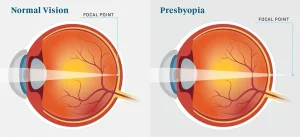
Presbyopia is a common age-related vision condition in which the eyes gradually lose the ability to focus on nearby objects. It typically becomes noticeable in people around the age of 40 and continues to progress with age. The condition occurs because the lens inside the eye becomes less flexible over time, making it harder to adjust focus for close-up tasks.
People with presbyopia often find it difficult to read small print, use a smartphone, or perform other tasks that require clear near vision. Many individuals begin holding reading materials farther away to see them more clearly. Presbyopia is a natural part of aging and affects nearly everyone eventually.
Although presbyopia cannot be completely prevented, it can be easily managed with corrective measures such as reading glasses, contact lenses, or other vision correction options.
Symptoms
The symptoms of presbyopia usually develop gradually and may become more noticeable in low-light conditions or after prolonged close work.
Common symptoms include:
-
Difficulty reading small print
-
Need to hold books, phones, or other objects farther away to see clearly
-
Blurred vision when focusing on nearby objects
-
Eye strain after reading or doing close work
-
Headaches related to visual effort
-
Difficulty seeing clearly in dim lighting
These symptoms may worsen slowly as the lens of the eye continues to lose flexibility.
Causes
Presbyopia occurs due to natural changes in the eye that happen with aging. The main cause is the gradual hardening and loss of flexibility of the eye’s lens.
When the lens becomes less flexible, it cannot easily change shape to focus light properly onto the retina for close objects. As a result, near vision becomes blurred while distance vision may remain clear.
The condition is a normal biological process and not a disease. It happens as part of the aging process of the eye.
Risk Factors
The main risk factor for presbyopia is increasing age. However, some factors may influence how early or severely it develops.
These include:
-
Age over 40 years
-
Certain medical conditions such as diabetes or multiple sclerosis
-
Use of certain medications that affect focusing ability
-
Eye conditions that impact the lens or surrounding structures
In some individuals, presbyopia may appear slightly earlier than usual due to these factors.
Complications
Presbyopia itself is not dangerous, but it can affect daily activities and quality of life if left uncorrected.
Possible complications include:
-
Difficulty reading books, newspapers, or digital screens
-
Eye strain from prolonged close work
-
Frequent headaches due to focusing effort
-
Reduced productivity in tasks requiring detailed vision
Proper vision correction can help eliminate most of these problems.
Prevention
Presbyopia cannot be completely prevented because it is a natural part of aging. However, maintaining good eye health may help support overall vision.
Helpful measures include:
-
Getting regular comprehensive eye examinations
-
Using proper lighting when reading or doing close work
-
Wearing appropriate corrective lenses when recommended
-
Taking breaks during prolonged screen or reading activities
-
Protecting the eyes from excessive sunlight with protective eyewear
-
Maintaining a healthy lifestyle that supports eye health
Early detection and proper vision correction can help manage presbyopia effectively and maintain clear vision for daily activities.
Advertisement
