
Overview
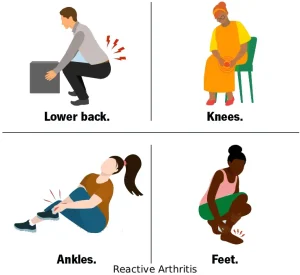
Reactive arthritis is an inflammatory joint condition that develops as a reaction to an infection in another part of the body, most commonly the gastrointestinal or genitourinary tract. The arthritis itself is not caused by direct infection of the joints but by an abnormal immune response triggered by the initial infection. Reactive arthritis often affects the knees, ankles, and feet and may also involve the eyes, skin, and urinary tract.
Reactive Arthritis Symptoms
Symptoms usually begin days to weeks after the triggering infection and can vary in severity.
-
Pain and swelling in joints, especially knees, ankles, and feet
-
Lower back or buttock pain
-
Morning stiffness that improves with movement
-
Inflammation of tendons, particularly at the heel
-
Redness and pain in the eyes
-
Burning sensation during urination
-
Skin rashes or sores on the soles of the feet or palms
-
Fatigue and general discomfort
Reactive Arthritis Causes
Reactive arthritis occurs due to an immune response following certain infections.
-
Gastrointestinal infections caused by bacteria such as Salmonella, Shigella, or Campylobacter
-
Genitourinary infections, particularly Chlamydia trachomatis
-
Immune system cross-reactivity affecting joint tissues
-
Genetic susceptibility influencing immune response
Reactive Arthritis Risk Factors
Certain factors increase the risk of developing reactive arthritis.
-
Recent bacterial infection of the digestive or urinary tract
-
Male sex
-
Age between 20 and 40 years
-
Family history of reactive arthritis
-
Presence of the HLA-B27 gene
-
Weakened immune system
Reactive Arthritis Complications
Most people recover fully, but some may develop long-term complications.
-
Chronic arthritis or recurrent joint inflammation
-
Persistent lower back pain
-
Reduced joint mobility
-
Chronic eye inflammation
-
Skin and nail changes
-
Impact on daily activities and quality of life
Reactive Arthritis Prevention
Prevention focuses on reducing the risk of triggering infections.
-
Practicing safe food handling and hygiene
-
Prompt treatment of gastrointestinal infections
-
Practicing safe sexual behaviors
-
Early diagnosis and treatment of sexually transmitted infections
-
Maintaining a healthy immune system
-
Regular medical follow-up after significant infections
Reactive arthritis is often self-limiting, and early management can help control symptoms and reduce the risk of long-term joint damage.
Advertisement
