
Overview
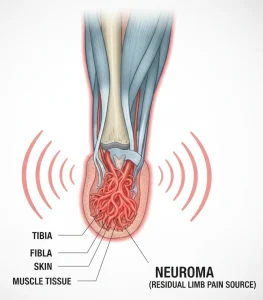
Residual limb pain is discomfort or pain felt in the remaining part of a limb after amputation. It differs from phantom limb pain, which is pain perceived in the part of the limb that is no longer present. Residual limb pain can interfere with healing, prosthetic use, and overall quality of life. The pain may be temporary during the healing phase or become chronic if underlying causes are not addressed.
Residual Limb Pain Symptoms
Symptoms can vary depending on the cause and severity of the condition.
-
Aching or throbbing pain at the amputation site
-
Sharp or shooting pain in the residual limb
-
Tenderness or sensitivity to touch
-
Swelling or inflammation
-
Redness or warmth at the stump
-
Pain worsened by prosthetic use
-
Reduced mobility or difficulty using a prosthesis
Residual Limb Pain Causes
Residual limb pain can result from multiple physical and neurological factors.
-
Surgical site infection
-
Poor wound healing or tissue damage
-
Bone spurs or irregular bone edges
-
Neuroma formation from severed nerves
-
Pressure or friction from an ill-fitting prosthesis
-
Scar tissue buildup
-
Reduced blood flow to the residual limb
Residual Limb Pain Risk Factors
Several factors increase the risk of developing residual limb pain.
-
Traumatic amputations
-
Inadequate postoperative pain control
-
Poorly fitting prosthetic devices
-
Delayed wound healing
-
Diabetes or vascular disease
-
Smoking
-
Repeated mechanical stress on the residual limb
Residual Limb Pain Complications
If untreated, residual limb pain can lead to significant complications.
-
Chronic pain syndromes
-
Difficulty using or tolerating a prosthesis
-
Reduced mobility and independence
-
Skin breakdown or ulcers
-
Increased risk of infection
-
Emotional distress, anxiety, or depression
Residual Limb Pain Prevention
Preventive strategies focus on proper surgical care, rehabilitation, and ongoing limb management.
-
Careful surgical techniques to reduce nerve and tissue damage
-
Effective postoperative pain management
-
Proper wound care and infection prevention
-
Regular prosthetic fitting and adjustments
-
Gradual rehabilitation and physical therapy
-
Maintaining good skin hygiene of the residual limb
-
Early evaluation of new or worsening pain
Residual limb pain is often manageable with early identification and appropriate treatment, allowing individuals to regain function and improve quality of life after amputation.
Advertisement
