
Overview
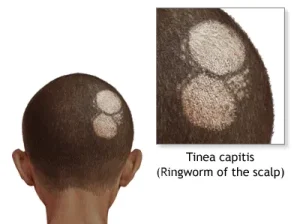
Ringworm of the scalp, also known as tinea capitis, is a contagious fungal infection that affects the scalp and hair shafts. It is most common in children but can occur at any age. The infection spreads through direct contact with an infected person, animal, or contaminated objects such as combs and hats. Ringworm of the scalp requires medical treatment, as topical remedies alone are usually not effective.
Symptoms of Ringworm (Scalp)
Symptoms can vary depending on the severity of the infection and the type of fungus involved.
-
Scaly, itchy patches on the scalp
-
Hair breakage or patchy hair loss
-
Black dots on the scalp from broken hair shafts
-
Redness or inflammation of the affected areas
-
Tenderness or pain in severe cases
-
Swollen lymph nodes in the neck or behind the ears
-
Pus-filled lesions in severe inflammatory forms
Causes of Ringworm (Scalp)
Ringworm of the scalp is caused by dermatophyte fungi that infect the scalp skin and hair follicles.
Common sources include:
-
Direct contact with an infected person
-
Contact with infected animals, especially cats and dogs
-
Sharing personal items such as combs, brushes, hats, or pillows
-
Contact with contaminated surfaces
The fungi thrive in warm, moist environments.
Risk Factors for Ringworm (Scalp)
Certain factors increase the risk of developing ringworm of the scalp.
-
Childhood, especially between 3 and 10 years of age
-
Close contact with infected individuals or pets
-
Crowded living conditions
-
Poor hygiene practices
-
Weakened immune system
Complications of Ringworm (Scalp)
Without proper treatment, ringworm of the scalp can lead to complications.
-
Permanent hair loss due to scarring in severe cases
-
Secondary bacterial infections
-
Inflammatory scalp reactions
-
Spread of infection to other body areas or people
Early treatment helps prevent long-term complications.
Prevention of Ringworm (Scalp)
Preventive measures focus on reducing exposure and maintaining good hygiene.
-
Avoid sharing combs, hats, towels, or pillows
-
Regularly wash hair and scalp with clean water
-
Inspect pets for signs of fungal infection
-
Clean and disinfect hair care tools
-
Seek prompt medical treatment for scalp rashes or hair loss
Good hygiene and early intervention are essential in preventing and controlling ringworm of the scalp
Advertisement
