
Overview
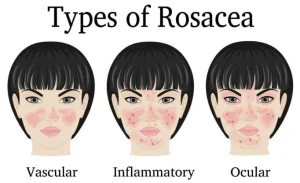
Rosacea is a chronic inflammatory skin condition that primarily affects the face, causing redness, visible blood vessels, and sometimes acne-like bumps. It most commonly involves the cheeks, nose, forehead, and chin. Rosacea tends to develop in adults, especially those between 30 and 60 years of age, and often follows a pattern of flare-ups and remissions. While it is not life-threatening, rosacea can significantly affect appearance and quality of life.
Symptoms of Rosacea
Symptoms vary between individuals and may worsen during flare-ups.
-
Persistent facial redness or flushing
-
Visible small blood vessels on the face
-
Red bumps or pus-filled pimples
-
Burning, stinging, or sensitive skin
-
Dry, rough, or scaly facial skin
-
Thickened skin, especially on the nose
-
Eye irritation, redness, or dryness in some cases
Causes of Rosacea
The exact cause of rosacea is not fully understood, but it is thought to result from a combination of genetic and environmental factors.
Possible contributing factors include:
-
Abnormal immune system response
-
Dysfunction of facial blood vessels
-
Overgrowth of skin mites
-
Genetic predisposition
Certain triggers can worsen symptoms, though they do not directly cause the condition.
Risk Factors for Rosacea
Several factors increase the likelihood of developing rosacea.
-
Fair skin
-
Family history of rosacea
-
Middle age
-
Female sex, although men may develop more severe symptoms
-
Frequent exposure to known triggers such as sun, heat, or spicy foods
Complications of Rosacea
If not properly managed, rosacea may lead to complications affecting the skin and eyes.
-
Thickening of the skin, particularly of the nose
-
Persistent facial redness
-
Eye involvement leading to irritation or vision problems
-
Emotional distress or reduced self-esteem
Early treatment can help prevent progression and complications.
Prevention of Rosacea
Rosacea cannot be completely prevented, but symptoms can often be controlled by avoiding triggers and following proper skin care practices.
-
Identify and avoid personal triggers
-
Use gentle, non-irritating skin care products
-
Protect skin from sun exposure
-
Avoid excessive heat and hot beverages
-
Seek medical advice for persistent facial redness or irritation
Consistent management and lifestyle adjustments can help reduce flare-ups and improve long-term control of rosacea.
Advertisement
