
Overview
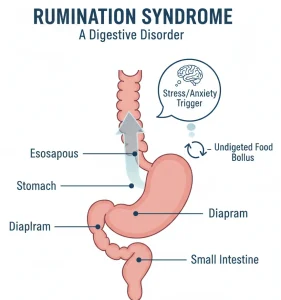
Rumination syndrome is a chronic digestive disorder in which recently eaten food is regurgitated, re-chewed, and either re-swallowed or spit out. Unlike vomiting, this process is usually effortless and occurs without nausea. It most commonly affects infants, children, and adults under stress, and it can lead to nutritional deficiencies and social distress if not recognized.
Symptoms of Rumination Syndrome
Symptoms are often noticeable shortly after eating and can be frequent or intermittent.
-
Regurgitation of undigested food shortly after meals
-
Re-chewing and re-swallowing or spitting out food
-
Bad breath or sour taste in the mouth
-
Abdominal discomfort or bloating
-
Weight loss or malnutrition in severe cases
-
Avoidance of eating due to embarrassment
Causes of Rumination Syndrome
The exact cause is not fully understood, but it is thought to involve learned or reflexive behaviors rather than structural problems.
Common contributing factors include:
-
Habitual or learned regurgitation behavior
-
Gastrointestinal motility issues
-
Stress or anxiety
-
Neurological or developmental disorders in some cases
Risk Factors for Rumination Syndrome
Certain factors make individuals more likely to develop rumination syndrome.
-
Infants and young children
-
Individuals under psychological stress
-
History of gastrointestinal disorders
-
Developmental or neurological conditions
Complications of Rumination Syndrome
If left untreated, rumination syndrome can lead to both physical and social complications.
-
Malnutrition and vitamin deficiencies
-
Tooth enamel erosion from stomach acid
-
Dehydration in severe cases
-
Social embarrassment and anxiety
-
Weight loss
Prevention of Rumination Syndrome
Prevention focuses on early recognition, behavior modification, and managing contributing factors.
-
Prompt evaluation of frequent regurgitation in children or adults
-
Addressing stress or psychological triggers
-
Educating caregivers on proper feeding techniques in infants
-
Early referral to a gastroenterologist or behavioral therapist
With proper intervention, rumination syndrome can be managed effectively, improving nutritional status and quality of life.
Advertisement
