
Overview
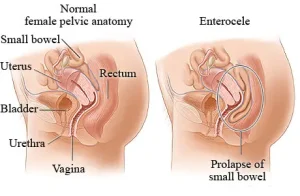
Small bowel prolapse, also known as enterocele, is a condition in which the small intestine descends and pushes into the lower pelvic cavity. It most commonly occurs when the pelvic floor muscles and supportive tissues weaken, allowing the small bowel to bulge downward. Enterocele is more frequently seen in women, particularly after pelvic surgery or childbirth, and may occur alongside other forms of pelvic organ prolapse.
Symptoms
Symptoms of small bowel prolapse can vary depending on severity. Mild cases may cause little discomfort, while more advanced cases can significantly affect daily life.
-
Sensation of pelvic pressure or fullness
-
Feeling of a bulge or heaviness in the vagina
-
Lower back pain that improves when lying down
-
Discomfort or pain during prolonged standing
-
Difficulty with bowel movements
-
Pain or discomfort during sexual activity
Symptoms often worsen by the end of the day or after physical exertion.
Causes
Small bowel prolapse develops when the structures that support the pelvic organs become weak or damaged. This weakening allows the small intestine to shift downward into the pelvic space. Common contributing factors include stretching or injury to pelvic tissues and loss of muscle strength over time.
Risk Factors
Several factors increase the risk of developing small bowel prolapse.
-
Pregnancy and vaginal childbirth
-
Previous pelvic or hysterectomy surgery
-
Aging and menopause
-
Chronic constipation or straining
-
Obesity
-
Chronic coughing or heavy lifting
-
Weak pelvic floor muscles
Complications
If left untreated, small bowel prolapse can worsen over time. Complications may include increasing pelvic discomfort, bowel dysfunction, and reduced quality of life. In severe cases, the prolapse can interfere with normal bowel emptying or cause irritation and inflammation of surrounding tissues.
Prevention
Prevention focuses on protecting and strengthening the pelvic floor. Pelvic floor muscle exercises can help maintain support for pelvic organs. Managing constipation, avoiding heavy lifting, maintaining a healthy weight, and treating chronic cough reduce strain on pelvic muscles. Early evaluation of pelvic symptoms allows timely management and helps prevent progression of small bowel prolapse.
Request an appointment
Advertisement
