
Overview
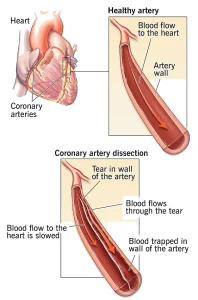
Spontaneous coronary artery dissection is a rare but serious heart condition in which a tear forms in the wall of a coronary artery. This tear allows blood to flow between the layers of the artery wall, creating a blockage that reduces or stops blood flow to the heart muscle. Spontaneous coronary artery dissection can cause a heart attack and often affects people who do not have traditional risk factors for heart disease. It occurs more commonly in women, particularly younger or middle-aged adults.
Symptoms
Symptoms often appear suddenly and are similar to those of a heart attack. They may include:
-
Chest pain or pressure
-
Pain spreading to the arms, shoulders, neck, or jaw
-
Shortness of breath
-
Sweating
-
Nausea or vomiting
-
Dizziness or lightheadedness
-
Extreme fatigue
Symptoms require immediate medical attention, even in individuals without known heart disease.
Causes
The exact cause of spontaneous coronary artery dissection is not fully understood. It occurs when a tear develops in the inner layer of a coronary artery or when bleeding forms within the artery wall without a clear tear. This leads to compression of the artery’s inner channel and reduced blood flow. In many cases, the condition develops without an obvious trigger.
Risk Factors
Several factors are associated with a higher risk of spontaneous coronary artery dissection:
-
Female sex, especially during pregnancy or after childbirth
-
Hormonal changes
-
Connective tissue disorders affecting blood vessel strength
-
Fibromuscular dysplasia
-
Extreme physical exertion or intense emotional stress
-
History of migraines or inflammatory conditions
Many people with spontaneous coronary artery dissection do not have traditional risk factors such as high cholesterol or smoking.
Complications
Spontaneous coronary artery dissection can lead to serious and potentially life-threatening complications, including:
-
Heart attack
-
Abnormal heart rhythms
-
Heart failure
-
Recurrent artery dissection
-
Sudden cardiac death in severe cases
Close medical follow-up is important due to the risk of recurrence.
Prevention
There is no guaranteed way to prevent spontaneous coronary artery dissection, as its exact cause is often unclear. However, steps that may help reduce risk include:
-
Managing underlying vascular or connective tissue conditions
-
Avoiding extreme physical strain without medical guidance
-
Managing emotional stress effectively
-
Following long-term heart care plans recommended by a healthcare provider
Early diagnosis, careful monitoring, and appropriate lifestyle adjustments are essential for improving long-term outcomes and reducing complications.
Advertisement
