
Overview
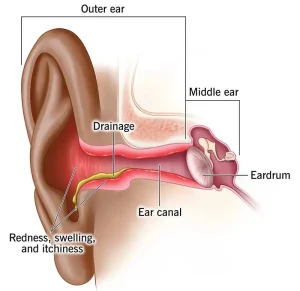
Swimmer’s ear is an infection of the outer ear canal, the passage that connects the outer ear to the eardrum. This condition is medically known as otitis externa. It commonly occurs when water remains in the ear after swimming, creating a moist environment that allows bacteria or fungi to grow.
Although it is often associated with swimming, swimmer’s ear can also develop from other causes such as minor injuries to the ear canal or excessive ear cleaning. The infection usually affects only the outer ear and does not involve the middle or inner ear.
Swimmer’s ear can occur in people of all ages, but it is more common in children and individuals who frequently swim or spend time in water. With proper treatment, most cases improve within a few days.
Symptoms
Symptoms of swimmer’s ear usually develop gradually and may become more severe if the infection worsens.
Common symptoms include:
-
Itching inside the ear canal
-
Redness and swelling of the outer ear
-
Ear pain that may worsen when the ear is touched or pulled
-
Fluid or pus draining from the ear
-
A feeling of fullness in the ear
-
Reduced or muffled hearing
In more severe cases, pain may spread to the face, neck, or side of the head.
Causes
Swimmer’s ear occurs when bacteria or fungi infect the skin of the ear canal. Moisture trapped in the ear canal provides an ideal environment for these microorganisms to grow.
Possible causes include:
-
Water remaining in the ear after swimming or bathing
-
Scratching or injuring the ear canal
-
Cleaning the ear with cotton swabs or sharp objects
-
Skin conditions such as eczema or dermatitis affecting the ear
-
Use of earbuds or hearing aids that trap moisture
These factors can damage the protective layer of the ear canal and allow infection to develop.
Risk Factors
Certain factors increase the likelihood of developing swimmer’s ear.
Risk factors include:
-
Frequent swimming, especially in untreated water
-
Living in humid climates
-
Narrow ear canals that trap water
-
Excessive ear cleaning
-
Skin conditions affecting the ear
-
Use of ear devices such as headphones or hearing aids for long periods
Children and swimmers who spend long hours in pools, lakes, or oceans may have a higher risk.
Complications
If untreated, swimmer’s ear may lead to complications, particularly if the infection spreads.
Possible complications include:
-
Temporary hearing loss due to swelling and blockage in the ear canal
-
Persistent or chronic ear infections
-
Spread of infection to nearby tissues
-
Severe pain and swelling of the ear
In rare cases, especially in people with weakened immune systems, the infection may become more serious.
Prevention
Several steps can help reduce the risk of swimmer’s ear by keeping the ear canal clean and dry.
Preventive measures include:
-
Drying the ears thoroughly after swimming or bathing
-
Tilting the head to allow water to drain from the ears
-
Avoiding insertion of cotton swabs or sharp objects into the ear canal
-
Using earplugs while swimming if prone to infections
-
Keeping ear devices clean and dry
-
Avoiding swimming in polluted water
Maintaining good ear hygiene and preventing moisture buildup in the ear canal are key to reducing the risk of swimmer’s ear.
Advertisement
