
Overview
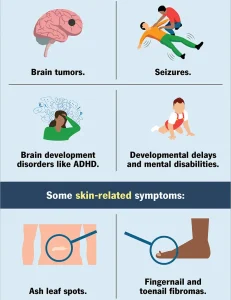
Tuberous sclerosis is a rare genetic disorder that causes noncancerous growths, known as tumors, to develop in various organs of the body. These growths can occur in the brain, skin, kidneys, heart, lungs, and eyes. Although the tumors are usually benign, they can interfere with the normal function of the affected organs.
The condition is caused by changes in specific genes that normally help regulate cell growth. When these genes do not function properly, cells can grow and divide more than they should, leading to the formation of tumors. Tuberous sclerosis can vary widely in severity, with some individuals experiencing mild symptoms while others develop significant health problems.
Symptoms often appear in early childhood, but the condition may sometimes be diagnosed later in life. Early diagnosis and ongoing medical care are important for managing symptoms and preventing complications.
Symptoms
Symptoms of tuberous sclerosis can differ greatly depending on which organs are affected.
Common symptoms include:
-
Seizures, often beginning in infancy or childhood
-
Developmental delays or learning difficulties
-
Behavioral problems such as hyperactivity or autism-like features
-
Skin abnormalities such as light-colored patches or thickened skin
-
Facial growths or small bumps on the skin
Other possible symptoms include:
-
Kidney tumors that may affect kidney function
-
Heart tumors, especially in infants
-
Lung problems that may cause breathing difficulties
-
Vision problems due to growths in the eyes
The severity and combination of symptoms can vary from person to person.
Causes
Tuberous sclerosis is caused by mutations in the TSC1 or TSC2 genes. These genes normally produce proteins that help control cell growth and prevent cells from growing uncontrollably.
When one of these genes is altered, the normal control of cell growth is disrupted, leading to the development of benign tumors in different parts of the body. The condition can be inherited from a parent or may occur due to a new genetic mutation that arises spontaneously.
If a parent carries the altered gene, there is a significant chance of passing the condition on to their children.
Risk factors
The primary risk factor for tuberous sclerosis is a genetic mutation affecting the TSC1 or TSC2 genes.
Factors associated with increased likelihood include:
-
Family history of tuberous sclerosis
-
Inherited genetic mutation from a parent with the condition
-
Spontaneous genetic mutation during early development
The disorder affects males and females equally and can occur in individuals of any ethnic background.
Complications
Tuberous sclerosis can lead to several complications depending on the organs involved.
Possible complications include:
-
Persistent seizures that may be difficult to control
-
Intellectual disability or developmental challenges
-
Kidney damage due to tumor growth
-
Heart rhythm abnormalities in infants
-
Breathing problems related to lung involvement
In some cases, complications can become severe and require long-term medical management.
Prevention
Tuberous sclerosis cannot be prevented because it results from genetic mutations. However, early diagnosis and regular medical monitoring can help detect complications and manage symptoms effectively.
-
Genetic counseling for families with a history of the condition
-
Regular medical checkups to monitor affected organs
-
Early treatment of seizures and developmental issues
-
Routine imaging tests to monitor tumor growth
-
Supportive therapies such as physical, behavioral, or educational therapy
Proper medical care and long-term monitoring can help individuals with tuberous sclerosis maintain better health and quality of life.
Advertisement
