
Overview
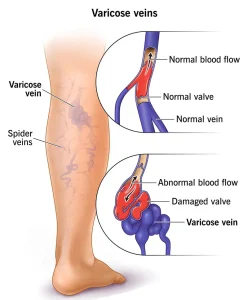
Varicose veins are enlarged, twisted veins that commonly appear on the legs and feet. They develop when vein valves weaken or become damaged, causing blood to pool instead of flowing efficiently back to the heart. This leads to increased pressure within the veins, making them visible under the skin.
The condition is common and often considered a cosmetic concern, but in some cases it can cause discomfort and lead to complications. Varicose veins tend to worsen over time if left untreated.
Symptoms
Symptoms of varicose veins can range from mild to severe and may include:
-
Bulging, twisted veins that are blue or purple in color
-
Aching, throbbing, or burning sensation in the legs
-
Heaviness or tired feeling in the legs
-
Swelling in the lower legs and ankles
-
Itching around the affected veins
-
Muscle cramps, especially at night
-
Skin discoloration around the ankles in advanced cases
Symptoms often worsen after long periods of standing or sitting and may improve with leg elevation.
Causes
Varicose veins occur due to malfunctioning valves within the veins. These valves normally prevent blood from flowing backward, but when they weaken, blood accumulates in the veins.
Common causes include:
-
Age-related wear and tear of vein valves
-
Prolonged standing or sitting
-
Increased pressure in the veins during pregnancy
-
Obesity, which adds strain to the venous system
-
Previous leg injury or blood clots
Risk Factors
Several factors increase the risk of developing varicose veins:
-
Family history of varicose veins
-
Advancing age
-
Female sex
-
Pregnancy
-
Obesity
-
Sedentary lifestyle
-
Occupations requiring prolonged standing
Complications
If untreated, varicose veins can lead to complications:
-
Chronic leg pain or swelling
-
Skin changes such as dryness, itching, or thickening
-
Venous ulcers, especially near the ankles
-
Superficial thrombophlebitis, which is inflammation of veins
-
Bleeding from veins close to the skin surface
Prevention
While varicose veins cannot always be prevented, certain lifestyle measures can reduce risk and slow progression:
-
Regular physical activity to improve circulation
-
Maintaining a healthy body weight
-
Avoiding long periods of standing or sitting
-
Elevating legs when resting
-
Wearing compression stockings if recommended
-
Avoiding tight clothing that restricts blood flow
Early management can help relieve symptoms and reduce the risk of complications.
Advertisement
