
Overview
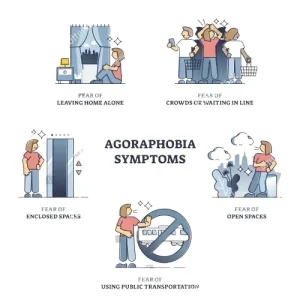
Agoraphobia (ag-uh-ruh-FOE-be-uh) is a type of anxiety disorder marked by intense fear and avoidance of places or situations that may cause panic, helplessness or embarrassment. The fear is often linked to situations where escape may feel difficult or help may not be easily available if anxiety becomes overwhelming.
Commonly feared situations include using public transportation, being in crowds, standing in line, or being in open or enclosed spaces. The anxiety may be triggered by thinking about the situation in advance or by actually being in it. Many people with agoraphobia worry about experiencing symptoms such as dizziness, fainting, falling, or sudden diarrhea without being able to get help.
Agoraphobia often develops after one or more panic attacks. After these attacks, a person may begin to avoid places where panic occurred or where another attack might happen. Over time, this avoidance can grow, making it difficult to feel safe in public or unfamiliar settings. In severe cases, a person may feel unable to leave home without a trusted companion.
Although agoraphobia can be challenging to treat because it involves facing feared situations, effective treatments are available. With proper therapy and, in some cases, medication, many people are able to reduce symptoms and regain independence.
Symptoms
Agoraphobia symptoms center on fear and avoidance of specific situations. Common fears include:
-
Leaving home alone
-
Being in crowds or waiting in line
-
Being in enclosed spaces such as elevators, movie theaters or small shops
-
Being in open spaces such as bridges, parking lots or malls
-
Using public transportation such as buses, trains or airplanes
These situations cause anxiety because of fear of being unable to escape, get help or manage panic symptoms. The fear may be accompanied by physical or emotional distress.
Other key features include:
-
Fear or anxiety that is out of proportion to the actual danger
-
Avoidance of feared situations, or needing a companion to face them
-
Enduring situations with intense distress
-
Significant disruption to daily life, work or social activities
-
Symptoms that typically last six months or longer
Some people also have panic disorder along with agoraphobia. Panic attacks involve sudden, intense fear that peaks within minutes and may include symptoms such as rapid heartbeat, chest discomfort, shortness of breath, dizziness, sweating, nausea or fear of losing control or dying. Fear of future panic attacks often reinforces avoidance behaviors.
Causes
The exact cause of agoraphobia is not fully understood. It likely develops from a combination of factors, including:
-
Biological factors such as genetics or certain health conditions
-
Brain chemistry and how the brain processes fear
-
Personality traits, such as being more anxious or sensitive to stress
-
Stressful or traumatic life experiences
-
Learned behaviors, such as associating certain places with panic or fear
For many people, agoraphobia begins after panic attacks, when fear of recurrence leads to avoidance of specific situations.
Risk factors
Agoraphobia can begin at any age but most often starts in the late teenage years or early adulthood, usually before age 35. Females are diagnosed more often than males.
Risk factors include:
-
Having panic disorder or other phobias
-
Experiencing intense fear or avoidance after panic attacks
-
Going through stressful life events such as abuse, assault or the death of a loved one
-
Having an anxious or nervous temperament
-
Having a close family member with agoraphobia
Complications
If left untreated, agoraphobia can severely restrict daily life. In severe cases, individuals may become housebound and unable to attend work, school or social activities.
Possible complications include:
-
Social isolation and strained relationships
-
Dependence on others for daily needs
-
Depression
-
Alcohol or substance misuse
-
Suicidal thoughts or behaviors
Early treatment can help prevent symptoms from becoming more severe and disabling.
Prevention
There is no guaranteed way to prevent agoraphobia. However, early action can reduce the risk of worsening symptoms. Avoidance tends to strengthen anxiety, so gradually facing feared but safe situations can help reduce fear over time.
Helpful strategies include:
-
Seeking treatment early for panic attacks or anxiety symptoms
-
Gradually practicing exposure to feared situations
-
Asking a trusted person to accompany you when facing anxiety-provoking places
-
Working with a mental health professional if fears begin to limit daily life
Getting help early can make treatment more effective and help prevent agoraphobia from significantly shrinking your world.
Advertisement
