
Overview
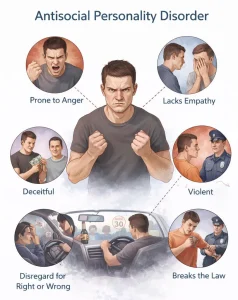
Antisocial personality disorder is a mental health condition in which a person consistently shows little or no regard for what is right or wrong and repeatedly ignores the rights and feelings of others. The condition is sometimes referred to as sociopathy. People with antisocial personality disorder often manipulate, deceive or treat others harshly, without feeling guilt or remorse for their actions.
Individuals with this disorder may frequently break the law, lie or act impulsively. Violent behavior, aggression and problems with alcohol or drug use are common. People with antisocial personality disorder often struggle to meet responsibilities related to work, school or family life.
Symptoms
Symptoms of antisocial personality disorder involve a persistent pattern of behavior that disregards social rules and the well-being of others.
Common symptoms include repeatedly:
-
Ignoring right and wrong
-
Lying or deceiving others for personal benefit
-
Showing little sensitivity to the feelings or needs of others
-
Using charm or wit to manipulate people
-
Having a strong sense of superiority and being highly opinionated
-
Engaging in criminal behavior or having repeated legal problems
-
Acting aggressively, violently or in a threatening manner
-
Showing no guilt or remorse after harming others
-
Taking risks without concern for personal or others’ safety
-
Failing to meet work, financial or family responsibilities
Most adults with antisocial personality disorder showed signs of conduct disorder before age 15. Symptoms of conduct disorder may include:
-
Aggression toward people or animals
-
Destruction of property
-
Persistent lying or dishonesty
-
Theft
-
Serious and repeated rule violations
Antisocial personality disorder is generally considered a lifelong condition. In some individuals, certain behaviors, particularly criminal or aggressive actions, may lessen with age, though the reasons for this change are not fully understood.
Causes
Personality develops through a combination of inherited traits and life experiences. It shapes how people think, feel and relate to others.
The exact cause of antisocial personality disorder is not known, but contributing factors may include:
-
Genetic traits that increase vulnerability to the disorder
-
Childhood experiences such as neglect, abuse or unstable family environments
-
Differences in brain development or brain function that affect impulse control and emotional regulation
These factors may interact over time, increasing the likelihood of developing antisocial behavior patterns.
Risk factors
Several factors are associated with an increased risk of antisocial personality disorder, including:
-
A diagnosis of conduct disorder during childhood
-
A family history of antisocial personality disorder, other personality disorders or mental health conditions
-
Experiencing physical, emotional or sexual abuse during childhood
-
Growing up in an unstable, chaotic or violent household
-
Being male, as the disorder is more common in men than in women
Complications
Antisocial personality disorder can lead to serious personal, social and legal consequences.
Possible complications include:
-
Domestic violence, child abuse or neglect
-
Alcohol or drug dependence
-
Incarceration or repeated involvement with the legal system
-
Suicide attempts or violent behavior toward others
-
Coexisting mental health conditions such as depression or anxiety
-
Ongoing financial, educational and social difficulties
-
Early death, often related to violence or risky behavior
Prevention
There is no proven way to prevent antisocial personality disorder. However, since antisocial behaviors often begin in childhood, early identification may help reduce long-term harm.
Possible preventive approaches include:
-
Recognizing early signs of conduct disorder in children
-
Providing early behavioral and psychological support
-
Creating stable, supportive and safe home environments
-
Involving mental health professionals when serious behavior problems appear
Early intervention may not prevent the disorder entirely, but it may help reduce the severity of symptoms and improve long-term outcomes.
Advertisement
