
Overview
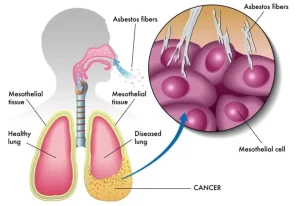
Asbestosis is a long-term lung disease caused by breathing in asbestos fibers. Asbestos is a naturally occurring mineral that is resistant to heat and corrosion. In the past, it was widely used in products such as insulation, cement and certain floor tiles.
When asbestos fibers are inhaled over a long period, they can become trapped in the lungs. Over time, this leads to scarring of lung tissue and causes breathing difficulties. Symptoms of asbestosis can range from mild to severe and usually do not appear until many years after the initial exposure, often decades later.
Inside the lungs, large airways called bronchi branch into smaller passageways known as bronchioles, which end in tiny air sacs called alveoli. These air sacs are responsible for exchanging oxygen and carbon dioxide. Asbestos fibers can lodge in the alveoli, interfering with normal lung function.
Most people who develop asbestosis were exposed to asbestos at work before strict regulations were introduced in the 1970s. Today, asbestos handling is closely regulated, and developing asbestosis is rare when safety guidelines are followed. Treatment focuses on managing symptoms and slowing disease progression.
Symptoms
The effects of asbestos exposure usually take a long time to appear, often 10 to 40 years after initial contact. Symptoms may gradually worsen over time and vary in severity.
Common signs and symptoms of asbestosis include:
-
Shortness of breath, especially during physical activity
-
A persistent, dry cough
-
Chest tightness or chest pain
-
Dry, crackling sounds in the lungs when breathing in
-
Widened and rounded fingertips or toes, a condition known as clubbing
Symptoms may initially be mild but can become more severe as lung scarring increases.
When to see a doctor
If you have a known history of asbestos exposure and notice worsening shortness of breath or other respiratory symptoms, consult a health care provider. Early evaluation can help identify the condition and guide appropriate management.
Causes
Asbestosis develops after prolonged exposure to high levels of asbestos dust. When inhaled, tiny asbestos fibers can settle deep within the alveoli, where oxygen exchange takes place. These fibers irritate lung tissue and cause scarring, which leads to stiffening of the lungs and difficulty breathing.
As the disease progresses, increasing amounts of lung tissue become scarred. Eventually, the lungs may become so stiff that they cannot expand and contract normally.
Smoking does not cause asbestosis, but it can worsen the condition. Smoking increases the retention of asbestos fibers in the lungs and is associated with faster disease progression.
Risk factors
People who worked in certain industries before asbestos regulations were enforced are at the highest risk of developing asbestosis.
High-risk occupations include:
-
Asbestos mining and milling
-
Aircraft and automobile repair
-
Boiler operation
-
Building and construction work
-
Electrical work
-
Railroad work
-
Refinery and mill work
-
Shipyard work
-
Removal of asbestos insulation from older buildings
The risk of asbestosis increases with both the amount and duration of asbestos exposure. Greater exposure over longer periods leads to a higher risk of lung damage.
Secondhand exposure may occur when asbestos fibers are carried home on clothing, affecting household members. People living near asbestos mines may also be exposed through airborne fibers.
Complications
Asbestosis increases the risk of serious health complications.
People with asbestosis have a higher risk of developing lung cancer, especially those who smoke or have smoked in the past. In rare cases, exposure to asbestos can also lead to malignant mesothelioma, a cancer affecting the tissue surrounding the lungs. This condition may develop many years after asbestos exposure.
Progressive lung scarring can also lead to severe breathing difficulties and reduced quality of life.
Prevention
The most effective way to prevent asbestosis is to reduce or eliminate exposure to asbestos.
Preventive measures include:
-
Following workplace safety regulations when working with asbestos-containing materials
-
Using protective equipment as required by employers
-
Avoiding disturbance of asbestos-containing materials in older buildings
-
Having asbestos materials inspected, repaired or removed only by trained and accredited professionals
Buildings constructed before the 1970s may contain asbestos in pipes, insulation or floor tiles. As long as these materials remain intact and undisturbed, the risk of exposure is low. Damage or improper handling can release asbestos fibers into the air, increasing the risk of inhalation.
Advertisement
