
Overview
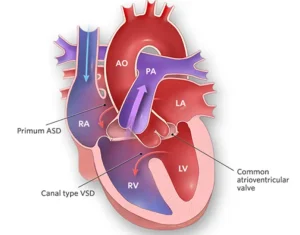
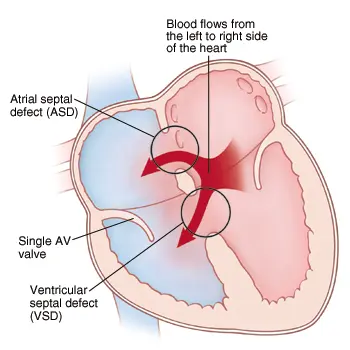
Atrioventricular septal defect is a congenital heart defect, meaning it is present at birth. It involves a combination of heart problems that affect the center of the heart. Children born with this condition have a hole in the wall that separates the heart’s chambers, along with abnormalities of the valves that regulate blood flow through the heart.
Because of this defect, extra blood flows into the lungs. The increased blood flow causes the heart to work harder than normal, which can lead to enlargement of the heart muscle over time. If left untreated, atrioventricular septal defect may result in heart failure and high blood pressure in the lungs. Treatment usually requires surgery during the first year of life to close the hole and repair the affected heart valves.
This condition is also known as atrioventricular canal defect or endocardial cushion defect.
Symptoms
The symptoms of atrioventricular septal defect depend on whether the defect is complete or partial.
In a complete defect, all four chambers of the heart are affected. Symptoms usually appear within the first weeks of life and are often similar to those of heart failure. These may include:
-
Bluish or grayish skin color caused by low oxygen levels
-
Rapid or difficult breathing
-
Excessive sweating
-
Fatigue
-
Irregular or rapid heartbeat
-
Poor appetite
-
Poor weight gain
-
Swelling of the legs, ankles or feet
-
Wheezing
In a partial defect, only the two upper chambers of the heart are affected. Symptoms may not appear until adolescence or adulthood and are often related to complications such as heart valve problems or high blood pressure in the lungs. Symptoms may include:
-
Fatigue and weakness
-
Nausea and reduced appetite
-
Persistent cough or wheezing
-
Rapid or irregular heartbeat
-
Reduced ability to exercise
-
Shortness of breath
-
Swelling of the legs, ankles or feet
-
Chest discomfort or pressure
Causes
Atrioventricular septal defect develops before birth while the baby’s heart is forming. The exact cause is not clearly understood. Genetic factors appear to play a role, and the condition is commonly associated with Down syndrome.
During normal heart development, the heart forms four chambers separated by walls and valves that ensure blood flows in the correct direction. In atrioventricular septal defect, these walls and valves do not form properly, allowing blood to mix between chambers and flow abnormally through the heart.
Risk factors
Certain factors may increase the likelihood of atrioventricular septal defect, including:
-
Genetic conditions, especially Down syndrome
-
A family history of congenital heart defects
-
Rubella infection during pregnancy
-
Poorly controlled diabetes during pregnancy
-
Alcohol use during pregnancy
-
Smoking during pregnancy
-
Use of certain medications during pregnancy that affect fetal development
Complications
Without treatment, atrioventricular septal defect can lead to serious complications. These may include:
-
Enlargement of the heart due to increased workload
-
High blood pressure in the lungs, known as pulmonary hypertension
-
Recurrent respiratory infections
-
Heart failure caused by the heart’s inability to pump enough blood
Even after successful treatment, some complications may occur later in life, such as breathing problems related to lung damage, irregular heart rhythms, leaky or narrowed heart valves, and reduced exercise tolerance.
Pregnancy may be possible for individuals who had surgical repair before permanent lung damage developed. However, pregnancy is not recommended for those with severe heart or lung complications. Consultation with a cardiologist experienced in congenital heart disease is important before planning a pregnancy.
Prevention
There is no known way to prevent atrioventricular septal defect. Some congenital heart defects are inherited, so individuals with a personal or family history of congenital heart disease may benefit from genetic counseling before pregnancy. Good prenatal care and management of health conditions during pregnancy may help reduce the risk of heart defects in babies.
Advertisement
