
Overview
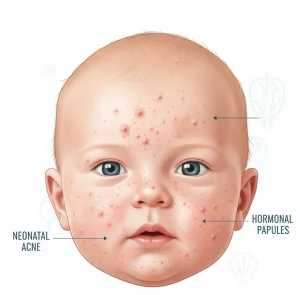
Baby acne, also known as neonatal acne, is a common and harmless skin condition that affects newborns and young infants. It usually appears within the first few weeks after birth and most often shows up on the cheeks, nose, forehead, or chin. Baby acne looks similar to teenage acne but does not cause discomfort or itching. In most cases, it clears up on its own without leaving scars and does not require medical treatment.
Symptoms
The signs of baby acne are usually mild and limited to the face, though occasionally the scalp, neck, upper chest, or back may be involved. Common symptoms include:
-
Small red or white bumps on the skin
-
Tiny pimples without blackheads or whiteheads
-
Rough or uneven skin texture in affected areas
The rash may become more noticeable when the baby is crying, overheated, or fussy.
Causes
The exact cause of baby acne is not fully understood. It is believed to be related to hormonal changes that occur around the time of birth. Possible contributing factors include:
-
Maternal hormones passed to the baby before birth, which can stimulate oil glands
-
Immature oil glands in the baby’s skin
-
Natural skin reactions during early development
Baby acne is not caused by poor hygiene, allergies, or infections.
Risk factors
Some babies are more likely to develop baby acne than others. Factors that may increase the likelihood include:
-
Exposure to maternal hormones during pregnancy
-
A family history of acne
-
Being born with more sensitive or reactive skin
Both breastfed and formula-fed babies can develop baby acne.
Complications
Baby acne is generally a benign condition and rarely leads to complications. It does not cause pain, itching, or long-term skin damage. Scarring is uncommon, especially when the bumps are left untreated and not squeezed or scrubbed. In rare cases, if the rash persists for several months or worsens, a healthcare provider may evaluate for other skin conditions that can resemble baby acne.
Prevention
There is no guaranteed way to prevent baby acne, but gentle skin care can help avoid irritation and support healthy skin. Helpful measures include:
-
Gently washing the baby’s face with lukewarm water
-
Avoiding harsh soaps, lotions, or oily products on the baby’s skin
-
Keeping the baby’s face clean and dry after feeding
-
Not squeezing or picking at the bumps
Baby acne usually resolves on its own within a few weeks to months, and most babies outgrow it without any lasting effects.
add content here for Symptoms
add content here for Symptoms
add content here for Symptoms
Advertisement
