
Overview
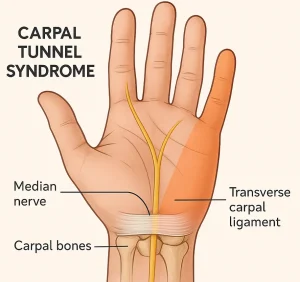
Carpal tunnel syndrome is a condition caused by compression of the median nerve as it passes through the carpal tunnel, a narrow passageway in the wrist. The median nerve controls sensation and movement in parts of the hand, particularly the thumb, index finger, middle finger, and part of the ring finger. When pressure builds within the carpal tunnel, it can lead to pain, numbness, and weakness in the hand. The condition often develops gradually and is commonly associated with repetitive hand movements.
Symptoms
Symptoms of carpal tunnel syndrome usually begin slowly and may worsen over time if the pressure on the nerve increases.
Common symptoms include:
-
Numbness or tingling in the thumb, index, middle, and ring fingers
-
Hand or wrist pain, especially at night
-
Burning or electric shock-like sensations in the fingers
-
Weakness in the hand
-
Difficulty gripping objects or dropping items
As the condition progresses, muscle weakness at the base of the thumb may develop.
Causes
Carpal tunnel syndrome occurs when the median nerve is compressed within the carpal tunnel. This compression may result from swelling or structural changes that reduce the available space in the tunnel.
Common causes include:
-
Repetitive wrist and hand movements
-
Prolonged use of vibrating tools
-
Wrist injuries or fractures
-
Inflammation of tendons within the carpal tunnel
-
Fluid retention
In many cases, multiple contributing factors are involved rather than a single cause.
Risk Factors
Several factors increase the likelihood of developing carpal tunnel syndrome.
Key risk factors include:
-
Repetitive hand or wrist activities
-
Occupations involving prolonged computer or tool use
-
Pregnancy
-
Diabetes
-
Rheumatoid arthritis
-
Obesity
-
Female sex
-
Family history of carpal tunnel syndrome
These factors may increase pressure within the carpal tunnel or make the median nerve more susceptible to compression.
Complications
If left untreated, carpal tunnel syndrome can lead to permanent nerve damage and long-term hand dysfunction.
Possible complications include:
-
Persistent numbness or loss of sensation
-
Weakness or atrophy of thumb muscles
-
Reduced hand coordination
-
Difficulty performing daily tasks
-
Chronic pain
Early treatment is important to prevent irreversible nerve injury.
Prevention
While not all cases of carpal tunnel syndrome can be prevented, certain measures may reduce the risk or slow progression.
Preventive strategies include:
-
Taking regular breaks from repetitive hand activities
-
Maintaining proper wrist posture during work
-
Using ergonomic tools and keyboards
-
Stretching and strengthening hand and wrist muscles
-
Managing underlying health conditions such as diabetes
Early recognition of symptoms and timely adjustments to daily activities can help prevent worsening of carpal tunnel syndrome.
Request an appointment
Advertisement
