
Overview
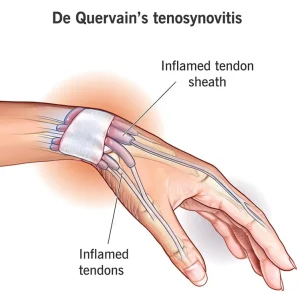
De Quervain tenosynovitis is a painful condition that affects the tendons on the thumb side of the wrist. It occurs when the tendons that control thumb movement become inflamed or irritated as they pass through a narrow tunnel near the wrist. This inflammation can restrict tendon movement and cause pain, especially during gripping, lifting, or twisting motions. The condition is common in individuals who perform repetitive hand or wrist activities.
Symptoms
Symptoms of De Quervain tenosynovitis usually develop gradually and may worsen with activity:
-
Pain and tenderness at the base of the thumb or along the wrist
-
Swelling near the thumb side of the wrist
-
Pain that increases when grasping, pinching, or turning the wrist
-
Difficulty moving the thumb or wrist smoothly
-
A catching or snapping sensation with thumb movement
-
Weakness in grip strength
Causes
De Quervain tenosynovitis is caused by irritation or thickening of the tendon sheath surrounding the affected tendons:
-
Repetitive thumb or wrist movements
-
Overuse from activities such as typing, texting, or lifting
-
Direct injury to the wrist or thumb
-
Inflammatory conditions affecting joints or tendons
-
Fluid retention or hormonal changes
Risk Factors
Several factors increase the risk of developing De Quervain tenosynovitis:
-
Repetitive hand or wrist activities
-
Age between 30 and 50 years
-
Female gender
-
Pregnancy or postpartum period
-
Certain occupations involving frequent hand use
-
History of wrist injuries or arthritis
Complications
If not properly managed, De Quervain tenosynovitis can lead to:
-
Chronic wrist and thumb pain
-
Reduced thumb mobility
-
Difficulty performing daily tasks
-
Decreased hand strength
-
Persistent inflammation requiring prolonged treatment
Prevention
Preventive strategies focus on reducing tendon strain and wrist stress:
-
Avoiding repetitive thumb and wrist movements when possible
-
Taking regular breaks during hand-intensive activities
-
Using ergonomic tools and proper hand positioning
-
Performing gentle stretching and strengthening exercises
-
Seeking early treatment for wrist or thumb pain
Advertisement
