
Overview
Diagnosis
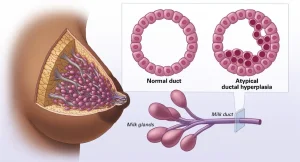
Atypical hyperplasia of the breast is most often diagnosed during a breast biopsy. A biopsy removes a small sample of breast tissue for lab testing. This procedure is typically performed when:
-
A clinical breast exam detects something concerning.
-
Imaging tests, such as a mammogram or ultrasound, show abnormal findings.
Treatment
Treatment for atypical hyperplasia depends on risk factors and biopsy results. Options may include surgery, medication, and careful monitoring.
Surgery
Surgery may be recommended to remove atypical cells, particularly if imaging or biopsy findings are concerning.
-
Tissue removed during surgery is examined for signs of breast cancer.
-
Most people with atypical hyperplasia do not have breast cancer, but occasionally surgery detects ductal carcinoma in situ (noninvasive cancer) or invasive breast cancer.
-
Surgery may not be necessary for low-risk patients, depending on biopsy results, mammogram findings, medical history, and previous breast surgeries.
Medicines to Lower Breast Cancer Risk
Hormone-blocking medications can reduce estrogen’s effect, lowering the risk of breast cancer. Common medications include:
-
Tamoxifen
-
Raloxifene (Evista)
-
Anastrozole (Arimidex)
-
Exemestane (Aromasin)
These medicines are usually taken daily for five years, though tamoxifen can sometimes be given every other day at a lower dose.
Careful Monitoring for Breast Cancer
Because atypical hyperplasia increases breast cancer risk, your healthcare team may recommend enhanced screening:
-
Breast self-exams to recognize normal breast tissue.
-
Clinical breast exams once or twice a year.
-
Annual mammograms.
-
Additional imaging tests if risk factors are present, such as breast MRI or molecular breast imaging.
Screening plans are personalized based on family history, genetic risk factors, breast density, and other health factors.
Other Ways to Lower Breast Cancer Risk
To reduce risk, healthcare professionals may suggest:
-
Avoiding hormone therapy for menopause if possible.
-
Risk-reducing surgery for those with very high genetic or family risk (e.g., prophylactic mastectomy).
-
Healthy lifestyle choices: regular exercise, maintaining a healthy weight, avoiding smoking, limiting or avoiding alcohol.
-
Participating in clinical trials to explore new preventive treatments or management strategies.
Advertisement
