
Overview
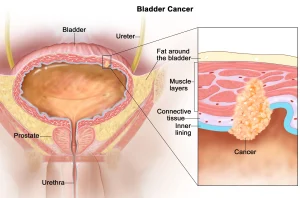
Diagnosis of Bladder Cancer
Bladder cancer is diagnosed using a combination of tests and procedures that help your doctor confirm the presence of cancer and determine its extent. Common diagnostic methods include:
-
Cystoscopy: A small, narrow tube called a cystoscope is inserted through your urethra to examine the inside of your bladder and urethra for signs of cancer. This procedure can be performed in a doctor’s office or hospital.
-
Biopsy (Transurethral Resection of Bladder Tumor – TURBT): During cystoscopy, a surgeon may remove a sample of tissue for testing. TURBT can also serve as an initial treatment for cancers confined to the inner bladder layers.
-
Urine Cytology: A urine sample is analyzed under a microscope to detect cancer cells.
-
Imaging Tests: Tests such as CT urograms and retrograde pyelograms provide detailed views of the urinary tract and can help detect cancer or abnormalities.
Determining the Extent of Bladder Cancer
Once bladder cancer is confirmed, additional tests may be needed to determine whether the cancer has spread. These tests may include:
-
CT scan
-
MRI (Magnetic Resonance Imaging)
-
PET (Positron Emission Tomography) scan
-
Bone scan
-
Chest X-ray
The results help your doctor assign a cancer stage, indicated by Roman numerals from 0 to IV. Lower stages indicate cancer confined to the inner bladder lining, while stage IV indicates spread to lymph nodes or distant organs.
Bladder Cancer Grade
Bladder cancers are also classified by grade, based on how abnormal the cancer cells appear under a microscope:
-
Low-Grade Bladder Cancer: Cells resemble normal tissue and grow slowly, with a lower chance of spreading.
-
High-Grade Bladder Cancer: Cells appear abnormal, grow aggressively, and are more likely to invade the bladder muscle and other tissues.
Bladder Cancer Treatment Options
Treatment depends on cancer type, stage, grade, overall health, and patient preferences. Options include:
-
Surgery: To remove cancer cells or the entire bladder.
-
Chemotherapy: Administered either directly into the bladder (intravesical) or systemically (through a vein).
-
Radiation Therapy: Uses high-energy beams to destroy cancer cells, sometimes combined with chemotherapy.
-
Immunotherapy: Stimulates the immune system to target cancer cells, delivered either intravesically or intravenously.
-
Targeted Therapy: Focuses on specific cancer cell vulnerabilities, used for advanced cancers.
Bladder Cancer Surgery
Surgical approaches include:
-
Transurethral Resection of Bladder Tumor (TURBT): Removes superficial tumors via the urethra without external incisions. A single dose of chemotherapy may follow to prevent recurrence.
-
Cystectomy: Partial or radical removal of the bladder. Radical cystectomy may also include removal of surrounding organs depending on sex.
-
Urinary Diversions: After radical cystectomy, options include:
-
Neobladder Reconstruction: Creates an internal bladder from intestine connected to the urethra.
-
Ileal Conduit: Urine flows through an external pouch on the abdomen.
-
Continent Urinary Reservoir: An internal pouch drained via catheter.
-
Chemotherapy for Bladder Cancer
-
Systemic Chemotherapy: Delivered intravenously to shrink tumors or target remaining cancer cells post-surgery.
-
Intravesical Chemotherapy: Administered directly into the bladder for superficial cancers, often after TURBT.
Radiation Therapy
Radiation therapy uses high-energy X-rays or protons to destroy cancer cells. It may be combined with chemotherapy for muscle-invasive cancers or when surgery is not possible.
Immunotherapy
-
Intravesical Therapy: BCG vaccine delivered directly into the bladder stimulates the immune system to attack cancer cells.
-
Intravenous Therapy: Used for advanced or recurrent bladder cancer to boost systemic immune response.
Targeted Therapy
Targeted drugs focus on specific cancer cell weaknesses and are typically reserved for advanced bladder cancers when other treatments fail. Testing can identify whether your cancer is likely to respond.
Bladder Preservation (Trimodality Therapy)
For patients avoiding bladder removal, a combination of TURBT, chemotherapy, and radiation therapy may be used. Radical cystectomy may still be recommended if cancer persists or recurs.
Follow-Up After Bladder Cancer Treatment
Even after successful treatment, bladder cancer can recur. Regular follow-up tests are essential:
-
Cystoscopy every 3–6 months initially, then annually after years of no recurrence.
-
Other tests may include imaging scans depending on cancer aggressiveness.
Advertisement
